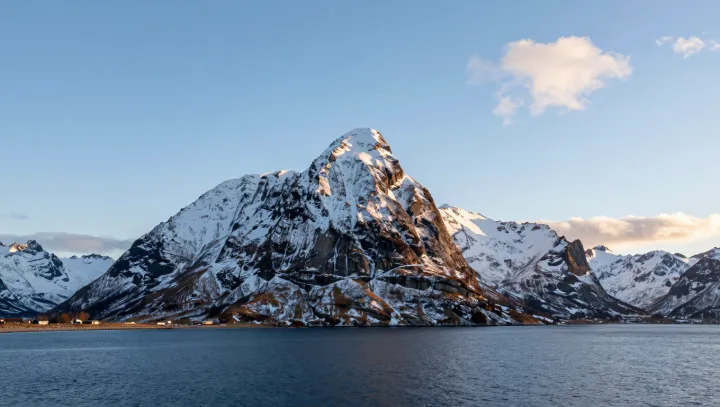
A single block of uplifted rock in western Tibet quietly controls the fates of four major Asian rivers. Mount Kailash does not host an iconic summit spring. Instead, it functions as a precise watershed divide, routing meltwater and rainfall into four separate drainage basins that eventually feed different oceans.
The mechanism is structural rather than mystical. Plate tectonics drove the uplift of the Tibetan Plateau, creating a high-altitude dome whose gravitational potential energy forces water to flow radially away from key ridgelines. Around Kailash, this topographic divide generates distinct catchment areas that seed the headwaters of the Indus, Brahmaputra, Ganges-linked and Yarlung–connected systems, even though their named channels begin some distance from the peak itself.
Glacial mass balance and orographic precipitation close the loop. Snowpack and small glaciers on the flanks of Kailash act as seasonal reservoirs, releasing runoff that feeds nearby lakes and streams. Those tributaries then join larger channels carved by fluvial erosion over immense spans of geological time. In hydrological terms, Kailash is less a source and more a switchboard: a nodal point in the continental drainage network where gravity, relief and climate jointly allocate water toward entirely different marine endpoints.
For geographers and climate scientists, the mountain illustrates how a watershed divide can exert strong marginal effects on continental-scale circulation of water without a single visible river rising from its summit.