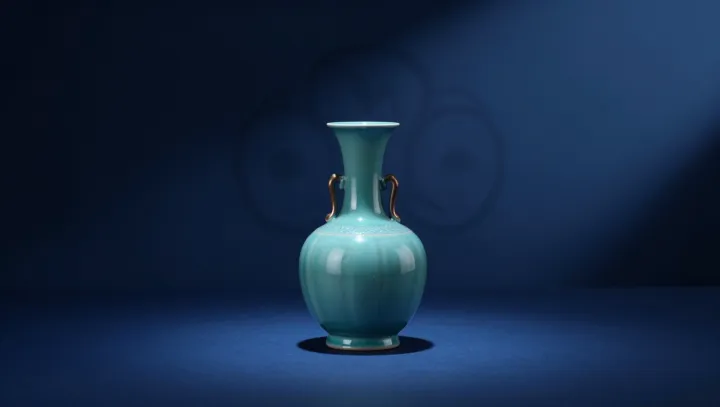
Molten glaze does not simply drip over clay; it is a managed reaction between glass and stone. Ancient workshops learned to balance silica, alumina and metallic oxides so that a powdery coating would first liquefy and then lock into a continuous glass phase over a darker ceramic body.
Silica provided the network former for this glass, while fluxes such as alkali and calcium compounds lowered the melting point, controlling viscosity the way blood plasma governs flow in a capillary system. Once the kiln reached peak temperature, diffusion at the interface allowed ions to migrate between glaze and body, creating a graded layer rather than a fragile, painted film.
Iron-rich clays beneath the glaze fired to a bronze-like tone, and part of that iron dissolved into the molten surface, shifting its optical absorption and reflectance. Thermal expansion coefficients had to be roughly matched so that, on cooling, the compressive stress stayed in the glaze, preventing crazing and delamination. What appears as liquid light frozen on bronze is, at its core, a negotiated equilibrium between viscosity, surface tension and solid-state bonding.