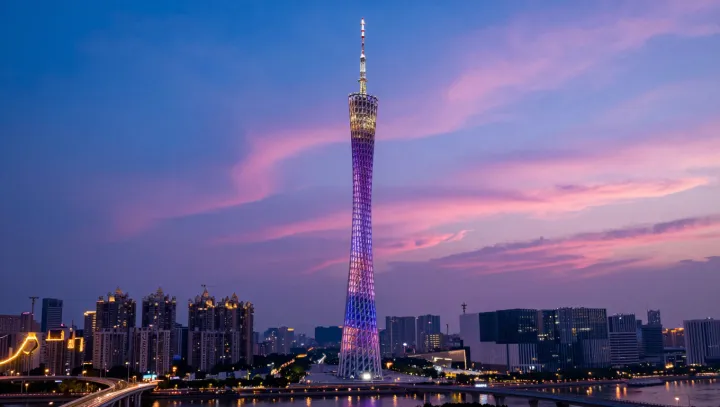
A winter horizon from Tokyo Skytree often frames Mount Fuji with a clarity that seems out of scale with its distance. The scene is not a trick of perspective but a quiet rearrangement of the air itself over the long corridor between the city and the volcano.
Colder air increases air density, tightening the vertical structure of the atmosphere and suppressing convection that would otherwise stir up dust and aerosols. With fewer suspended particles along the line of sight, Mie scattering declines, so less white glare washes out distant contours. At the same time, lower humidity reduces the formation of tiny water droplets that act as additional scattering centers and enlarge particles through hygroscopic growth, further cutting haze.
The remaining molecules still drive Rayleigh scattering, which preferentially redirects shorter blue wavelengths, but with the aerosol background thinned, the contrast between sky and mountain edge improves rather than blurs. Cooler, more stratified air masses also stabilize refractive index gradients, limiting the shimmering distortions known as atmospheric refraction that can wobble ridgelines. Over more than a hundred kilometers, those marginal effects compound, turning seasonal shifts in thermodynamics and moisture into a perceptible redrafting of Tokyo’s skyline outline.