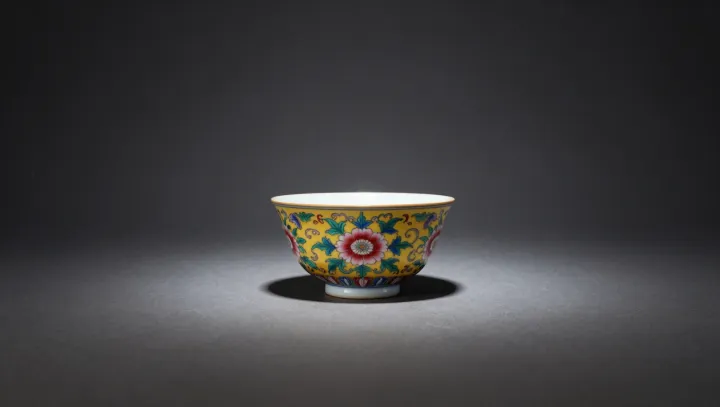
Imperial yellow porcelain did not just decorate the court; it organized it. A single glaze tone became an exclusive channel of authority, so precise and so policed that the wrong shade on the wrong table could trigger punishment.
The color’s power came from a tight fusion of ritual regulation and supply control. Court edicts fixed which vessels, which shapes and which contexts could bear pure yellow glaze, effectively assigning the hue to the throne itself. Kilns producing the porcelain answered directly to the palace, creating a closed loop of commissioning, inspection and storage. That bureaucratic design mirrored a low-entropy system: every piece was tracked, every deviation flagged as disorder, not aesthetics.
Within this hierarchy, marginal effects were weaponized. A bowl in full imperial yellow could mark proximity to the ruler; a band of the color on a lesser piece could signal delegated authority; its absence could quietly demote. Because color functioned as encoded protocol, not ornament, misuse looked like a breach of security rather than a fashion error. In a court where visibility meant survival, a glaze recipe, a firing schedule and a palette chart together formed a monopoly of power that operated through the eye long before it reached the law.