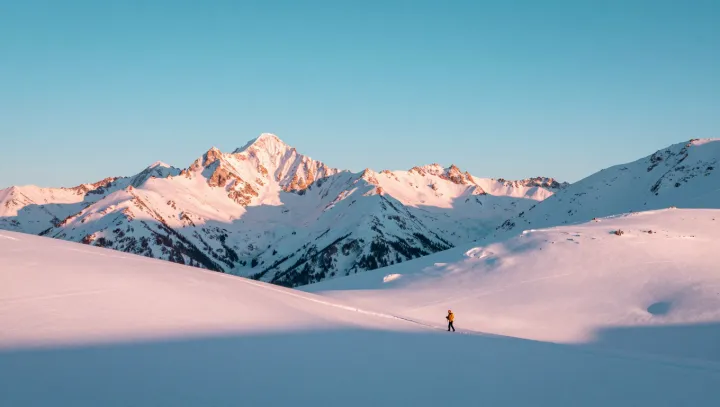
Deep snow that halts traffic in major cities can, in remote Chinese mountain villages, make the night air feel less brutal. The same frozen layer that collapses transport networks also rewires basic energy flows between ground, houses and sky, turning a feared hazard into a quiet thermal asset.
The key is physics, not paradox. Fresh snow has very low thermal conductivity, trapping countless air pockets that resist heat transfer from warmer soil to colder air. Instead of radiative cooling stripping heat straight into the open sky, the snowpack slows that loss, nudging the local energy balance and even affecting entropy production in the near‑surface layer. As the ground loses heat more slowly, the thin layer of air brushing village walls and courtyards can stay a little milder than it would over bare, frozen earth.
That insulating effect also interacts with human behavior. With roofs and paths blanketed, villagers reduce convective drafts and seal gaps, cutting the rate at which indoor heating leaks outside. The result is a modest but real gain in effective comfort and a lower marginal effect of each extra unit of fuel burned for stoves and small heaters. In dense cities, snow mainly exposes infrastructure fragility; in scattered mountain settlements, it can briefly serve as a natural blanket between fragile homes and a much colder sky.