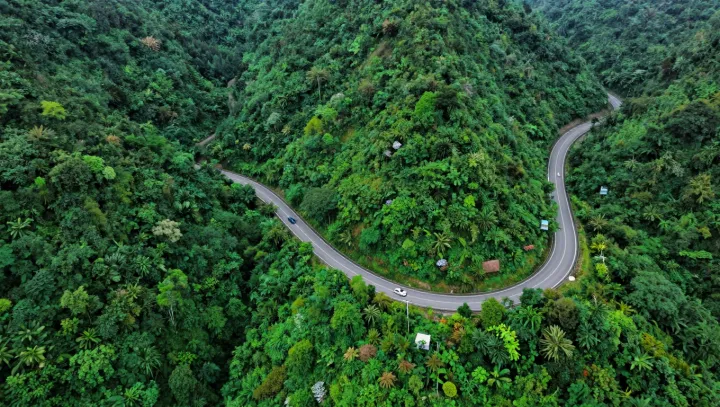
Tree trunks rising in tight vertical lines can already look like an aerial grid if the camera stops behaving like a human eye. The most radical shift comes from shooting low, mid, and high instead of at standing height, then treating each level as if it were a different flight altitude. Near-ground shots emphasize texture and foreground scale, while higher positions compress the canopy into something closer to a map view.
The lens then becomes a control knob for perceived altitude. Wide focal lengths exaggerate parallax, the relative motion of near and far trees, helping the forest read like a layered terrain model. Longer focal lengths compress distance, turning scattered trunks into dense bands of tone, similar to what a drone sees when it climbs and flattens depth. By deliberately pairing focal length with height, creators can engineer either a sweeping overview or a tunnel-like flight path through the trees.
Overlap completes the illusion. By capturing sequences of frames with generous overlap and consistent exposure, photographers create raw material that mimics the data a mapping drone would feed into a structure-from-motion pipeline. Even without complex reconstruction, this overlap enables smooth digital pans, stitched panoramas, and subtle motion parallax in post, turning a walk through the woods into something that feels like a controlled aerial survey.