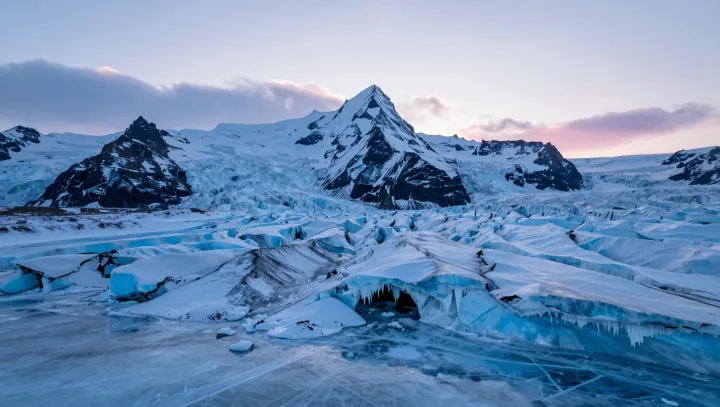
Thin, bright ice clings to Jade Dragon Snow Mountain while similar low-latitude glaciers elsewhere shrink into rock. The mountain sits below the usual survival zone for tropical and subtropical ice, yet its glaciers persist, acting as a stubborn anomaly in a warming climate system.
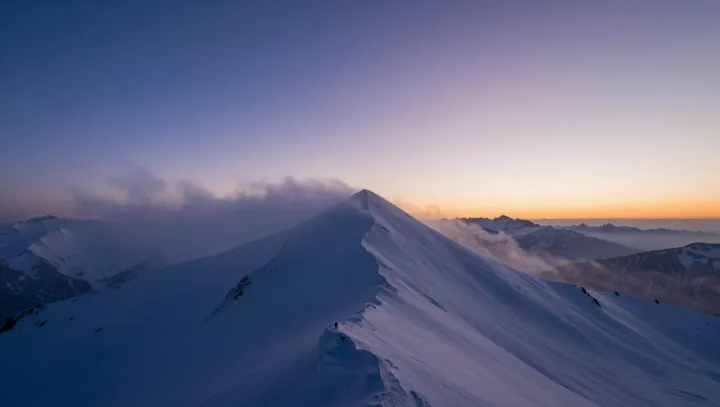
The explanation starts with geography. Steep relief and north-facing cirques reduce direct solar radiation and lower the net shortwave input that drives surface melt. High, stacked cloud layers and frequent fog further cut incoming energy, shifting the local surface energy balance toward longwave cooling through clear nocturnal skies. In this narrow band of conditions, the glacier’s mass balance is less negative than global peers at similar latitude and height.
Moist air masses moving along complex monsoon pathways are forced upward by the mountain’s topography, enhancing orographic precipitation. That boosts solid snowfall at elevations where many low-latitude ranges receive rain instead, feeding accumulation zones that still reach the equilibrium line altitude needed for ice formation. Seasonal snow cover raises surface albedo, slowing ablation and slightly delaying the onset of bare-ice melt.
Deep crevasses and broken seracs are not just dramatic scenery: they expose internal ice to cold air, promote efficient conductive heat loss, and channel meltwater away, which limits the residence time of warm water on the surface. Subsurface firn layers act as a porous buffer, refreezing part of that melt and releasing latent heat in a way that stabilizes local temperature gradients. The result is a precarious but still functioning cryospheric niche, in which altitude, orientation, and airflow combine to keep ice where, by global statistics, it should already be gone.