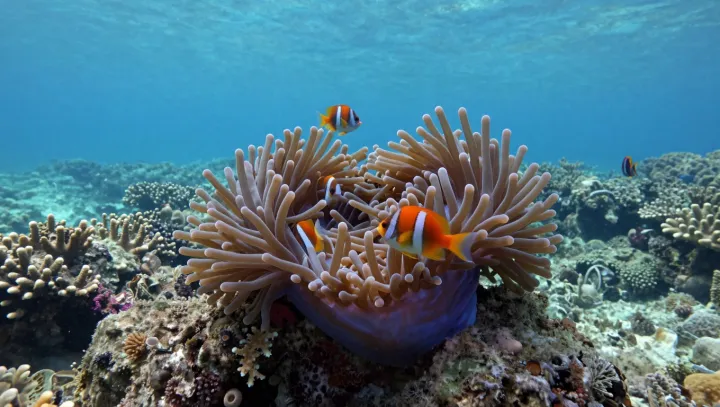
A thin layer of mucus lets baby clownfish move through stinging sea anemone tentacles without injury. Instead of armor, this coat works as biochemical language. Molecules on the fish skin interact with the anemone surface and change how its nematocysts, the stinging cells, decide whether to fire.
Newly settled juveniles do not start out protected. They repeatedly brush against the tentacles, collecting the host mucus while gradually masking their own. During this contact, the pattern of surface proteins and glycoproteins on the fish shifts toward that of the anemone, altering local chemoreception and mechanoreception thresholds in the tentacle tissue.
The result is a form of immune recognition rather than simple tolerance. To the anemone, the coated fish now matches a chemical profile associated with self, so nematocyst discharge is inhibited even at close range. The same tentacles still deliver full stings to other fish, preserving predation efficiency while providing the clownfish with a highly localized refuge.