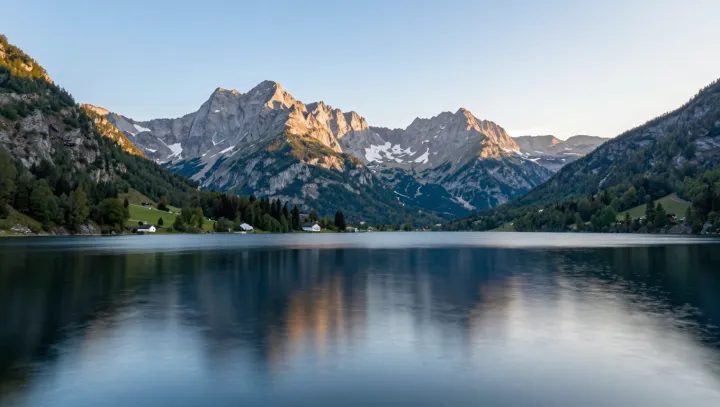
A single scenic drive across the Teton Range reads like an exposed hard drive of Earth history, where erosional processes replace neural firing as the system clock. Road cuts and overlooks line up U-shaped valleys, hanging tributaries and polished bedrock, each feature a physical record of alpine glaciation and ice dynamics rather than a simple postcard view.
As the road swings away from the highest peaks, the geomorphic script changes. Broad basins appear where ancient lakes once pooled behind moraines and fault scarps. Their sedimentary strata stack like data layers, with varves and carbonate beds preserving paleoclimate signals in the form of oxygen isotope ratios and fossil assemblages. These lacustrine deposits capture shifts in precipitation patterns, temperature gradients and ecosystem turnover across vast spans of geologic time.
The continuity of the drive is what ties the system together. Tectonic uplift, glacial erosion and basin subsidence integrate into a single, legible cross section, turning a casual outing into a traverse through stratigraphy and geomorphology. Windshield to horizon, the route functions as a field-scale interface where landscape evolution and climate feedbacks are not abstractions but visible infrastructure in stone and sediment.