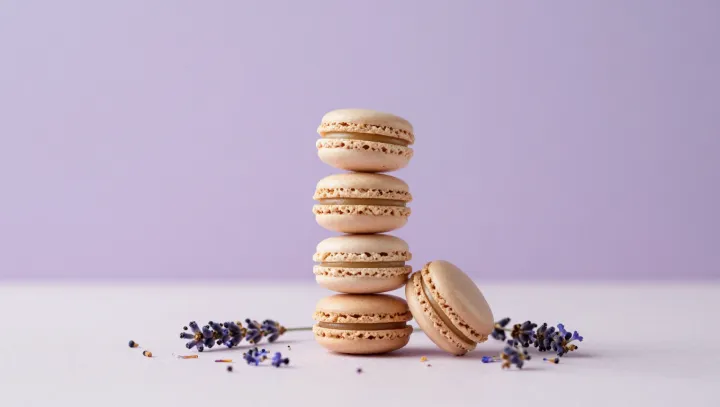
Humidity hangs over a tray of macarons like an unseen price tag. In professional kitchens, the main variable cost is not butter or almond flour but the exact behavior of air and heat around each shell, where a hairline crack can turn an entire batch into waste.
Behind that pastel surface sits a tight band of acceptable water activity and heat transfer. Protein denaturation in egg whites, sugar crystallization, and the glass transition of the meringue matrix all depend on relative humidity and surface temperature staying within a narrow window. A brief spike in ambient moisture can slow evaporation, trap steam, and build internal vapor pressure until the shell fractures instead of forming the desired smooth dome and foot.
The production line behaves less like a recipe and more like a controlled experiment in thermodynamics and fluid dynamics. Convection patterns in the oven, boundary layer stability around each shell, and cooling curves after baking determine whether fillings diffuse cleanly into a stable crumb or leak through microscopic fissures. Because retail standards treat visible cracks as a defect, a single misaligned parameter can force disposal or down‑grading of trays that are technically edible but commercially unusable, inflating the real cost of every macaron that survives to the display case.