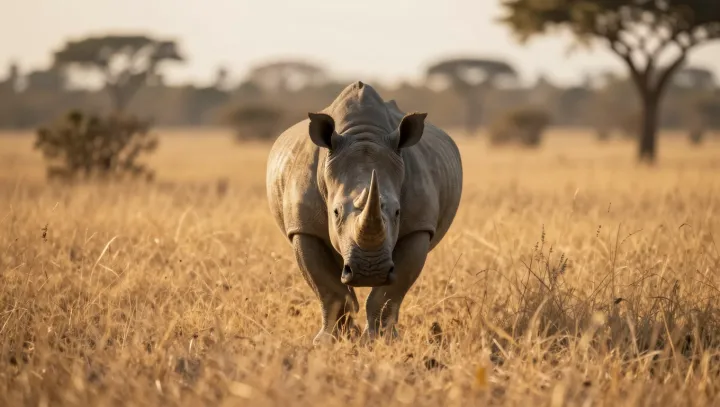
A grass‑fed body can become a tank when natural selection keeps rewarding mass, muscle and awareness on open ground. The rhino shows how a strict herbivore converts low‑energy plants into explosive power, sprint capacity and a sensory toolkit tuned to survival rather than elegance.
Grass is poor in calories, but a large gut and slow digestion raise effective energy capture and shape basal metabolic rate. Over generations, individuals that processed cellulose more efficiently could grow heavier, store more glycogen in muscle and support dense limb bones. This architecture lets a rhino channel force through short, columnar legs and robust tendons, turning chemical energy into torque that can flip a vehicle while still delivering brief, high‑power runs faster than a human sprinter.
Life on open plains then refined the control systems. Predators and human disturbance favored ears that rotate like parabolic receivers and nasal cavities packed with olfactory epithelium, while small eyes and limited visual acuity remained a tolerable compromise. Sensory trade‑offs, biomechanics and energy economics together built a niche specialist: a grazer that dominates by mass, acceleration and early warning rather than sharp vision.