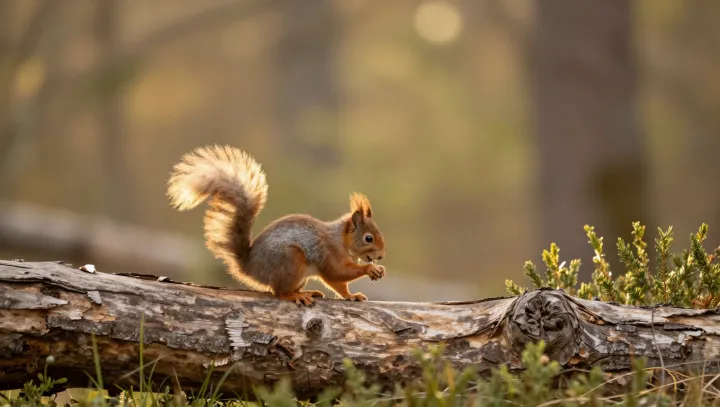
The word “squirrel” looks simple on a park sign, yet in biology it stretches across an entire mammal family. Under the name Sciuridae, it groups the agile tree squirrels, the burrowing ground squirrels, the gliding flying squirrels, the striped chipmunks, and the heavyset marmots into one taxonomic unit.
Sciuridae is defined not by cuteness but by anatomy and evolutionary lineage. Shared traits include specialized incisors used for gnawing, a characteristic skull structure, and a digestive system adapted to high-fiber seeds and plant material. Zoologists place these animals within the order Rodentia, using comparative morphology and molecular phylogenetics to map how tree-living and ground-living forms diverged from common ancestors while keeping a recognizable body plan.
In this framework, the energetic chipmunk on a trail and the alpine marmot in a rocky burrow are not distant curiosities but branches on the same family tree. The name “squirrel” becomes less a label for one familiar silhouette and more a reminder that everyday language often collapses an entire evolutionary narrative into a single word.