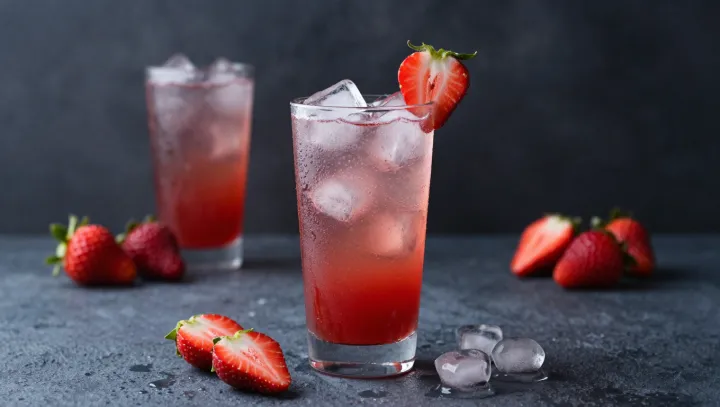
Cold from a melting ice cube can make a strawberry taste sweeter instead of diluted. When the surface cools, volatile aroma compounds evaporate more slowly, so their release stays closer to the moment you bite. That timing syncs aroma with sugar on the tongue, which the brain integrates into a stronger sweetness signal.
Temperature also changes how taste receptors work. Lowering the berry just above the threshold where taste buds slow down can reduce the sharpness of citric acid and malic acid, which carry sourness, while sucrose and fructose still register clearly. With acidity partially muted, the same sugar concentration feels higher, a classic shift in sensory contrast rather than any real increase in sugar.
Texture adds another layer. Brief contact with ice firms cell walls and pectin, so the fruit snaps more cleanly when bitten. That mechanical break releases juice in a quick burst, spiking the concentration of dissolved sugars and organic acids at the taste buds. The palate reads that focused pulse as intensity, even though the total sugar content remains unchanged.