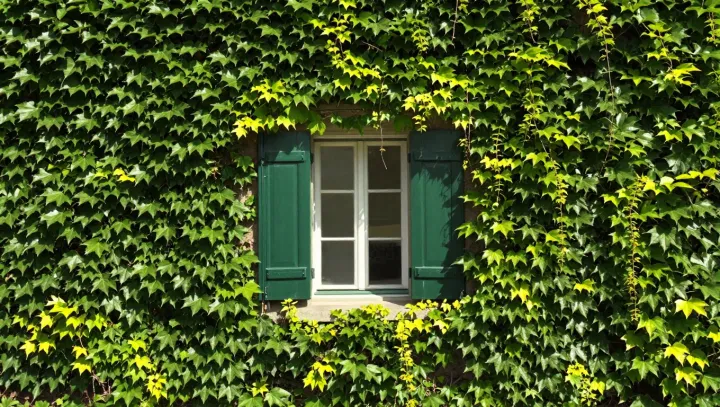
A dense skin of Boston ivy on a wall behaves like a silent piece of infrastructure: it cools rooms, damps street noise, filters dirty air and can still help destroy the very masonry that supports it.
The foliage acts as a living insulation layer, cutting solar radiation before it reaches brick or concrete and lowering heat flux through the wall. Transpiration from leaves drives latent heat loss, trimming indoor temperature and indirectly easing energy demand linked to basal metabolic rate in occupants. The plant canopy also scatters and absorbs sound waves, creating a basic acoustic baffle that softens traffic noise without adding mechanical systems.
Leaves and stems intercept particulate matter and nitrogen oxides, using stomata and waxy cuticles as a cheap filtration membrane for polluted air. Yet the same adhesive pads and tendrils that anchor the vine can wedge into mortar joints, trap moisture and shield hairline cracks from view. Prolonged humidity accelerates freeze–thaw cycles and entropy in the building envelope, loosens bricks and corrodes hidden metal ties. When roots are planted too close to foundations, they exploit gaps, disrupt drainage and complicate any later structural survey, leaving owners with a green facade that doubles as a costly blindfold.