Bare soil along a riverbank, then a sudden vertical grid of red stalks: the red spider lily seems to erase its own leaves before it dares to flower. This split life is not a poetic accident but a precise survival program encoded in the bulb beneath the surface.
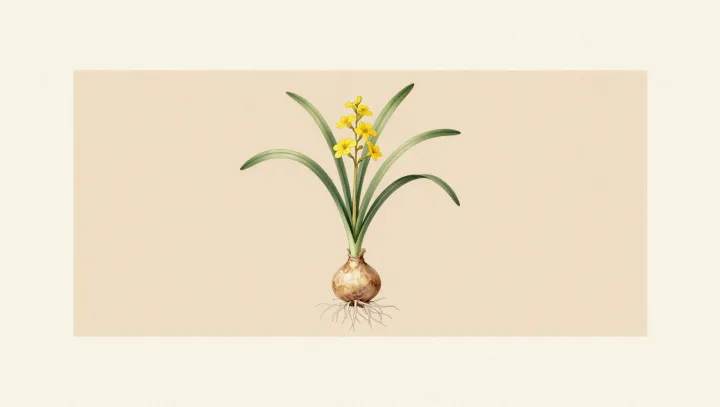
The plant runs its leafy phase first. Narrow leaves emerge, carry out photosynthesis and push carbohydrates into the underground bulb, a compact organ of starch storage and meristem tissue. When the bulb reaches a sufficient energy threshold, the leaves senesce and die back. What looks like disappearance is programmed cell death controlled by plant hormones such as abscisic acid, which promotes dormancy, and gibberellins, which later help trigger the flowering shoot.
Freed from the shade and energy demands of foliage, the bulb can invest almost all stored reserves into a single, fast floral bolt. Internal circadian rhythms and photoperiodism, the ability to measure day length, align this bolt with a predictable window of temperature and rainfall along river valleys. By separating vegetative growth and reproduction in time, the species reduces competition between leaves and flowers for water and nutrients, stabilizes its reproductive success in flood-prone soils and turns that eerie, leafless bloom into an efficient ecological tactic rather than a mystery.