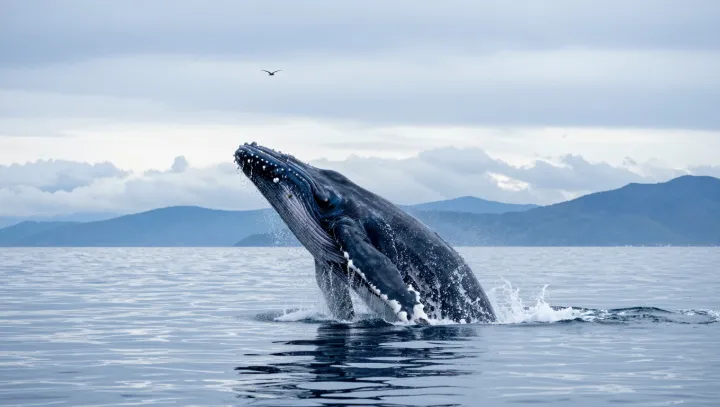
One whale sinking to the abyss can underwrite an entire deep‑sea community for decades, functioning as a slow‑release trust fund of carbon and energy. Known as a whale fall, the carcass delivers a sudden, concentrated injection of organic matter to a region where food usually arrives as sparse marine snow.
The process unfolds in stages that mirror an economy moving from cash payout to long‑term investment. At first, sharks, hagfish and other scavengers strip soft tissue, rapidly converting stored lipids and proteins into biomass and heat, governed by basic metabolic rate and energy transfer rules. As the feast ends, smaller invertebrates and microbes mine the remaining scraps, driving a pulse of decomposition and nutrient remineralization into surrounding sediments.
The skeleton then turns into infrastructure. Inside fat‑rich bones, anaerobic bacteria break down lipids and generate sulfide, a key substrate in chemosynthesis. Chemosynthetic bacteria use this chemical energy, not sunlight, to fix carbon, creating a localized oasis that attracts clams, mussels and specialized worms. This chemosynthetic stage can persist for decades, locking away carbon while slowly exporting energy to the wider deep‑sea food web, long after the original whale has vanished from sight.