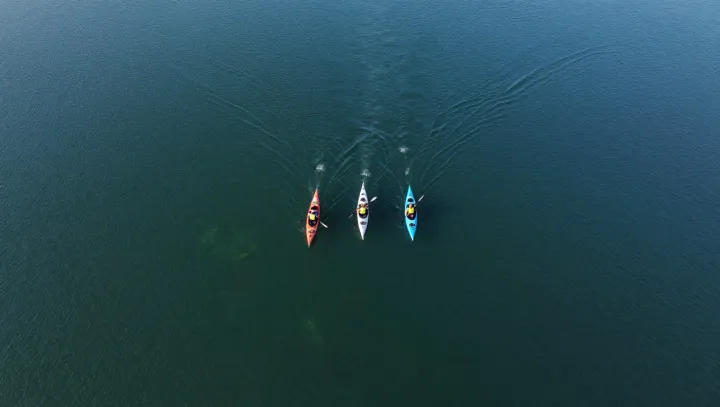
A racing shell turns human effort into forward motion with unusual efficiency, which is why rowers can produce more power per kilogram than many elite sprinters on land. The hull is long, narrow and stiff, minimizing drag and limiting energy lost to flexing. Oars extend that design, acting as long levers that convert muscular force into propulsive torque on the water.
On land, much of a sprinter’s work is spent on vertical oscillation, impact forces and joint stabilization. In a shell, the sliding seat and rigging align major muscle groups so that hip extensors, quadriceps and back muscles fire in sequence through a long stroke. This improves mechanical efficiency and allows sustained work rates close to an athlete’s maximal oxygen uptake and lactate threshold.
Water drag rises predictably with speed, so the shell’s smooth hull and low frontal area keep resistance relatively low for the power applied. With the boat supporting body weight, less energy is diverted to counteracting gravity and ground reaction forces. The result is a system in which cardiovascular capacity and muscle power are translated into measurable output with unusually little waste.