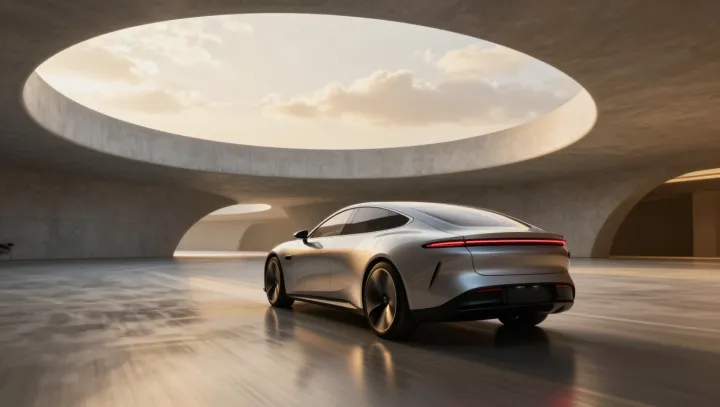
A blank panel does not signal absence here. A concept electric SUV stripped to near-monastic surfaces carries an electronic load that many production cars cannot match, with solid-state lidar in the bumper, radar arrays behind sealed bodywork, and high-resolution cameras stitched into the roofline and mirrors, all feeding a central compute stack hidden under the flat floor.
This restraint is not aesthetic vanity; it is systems engineering. Instead of scattering dozens of isolated electronic control units, the concept routes sensor data into a zonal architecture and a single high-throughput system-on-chip, running sensor fusion, path-planning algorithms, and over-the-air diagnostics on the same silicon that handles infotainment, shrinking wiring mass while increasing bandwidth and determinism in the controller area network and Ethernet backbone.
The real provocation sits in the control logic. Where many showroom vehicles still rely on fragmented software layers, this prototype runs a unified vehicle operating system with hardware abstraction, so braking, torque vectoring, thermal management, and adaptive suspension all respond to a shared state estimate, allowing predictive energy management and fail-operational safety strategies that current platforms often bolt on as afterthoughts.