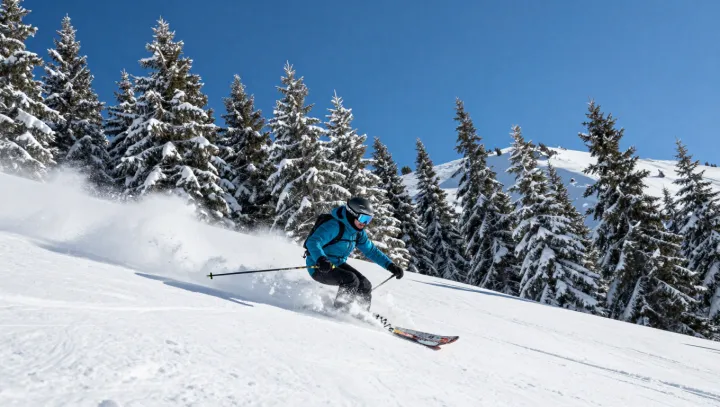
Snow punishes fear more than speed. A skier who obsesses over not falling locks joints, stiffens the torso, and fights gravity, while the athlete who trains sliding and falling treats friction, momentum, and impact as variables that can be managed, not monsters to be avoided.
The physics is blunt. Edges lose grip. Skis drift. On steeper pitches, kinetic energy climbs, and without rehearsed ways to bleed that energy through controlled skids or hip-checks, one mistake becomes a long, uncontrolled tumble. By practicing side-slipping, hockey stops, and deliberate low-speed falls, skiers learn how to modulate pressure, control the center of mass, and use snow resistance like a brake pedal rather than a panic button.
Progress comes from flirting with the limit, not worshipping stability. Technical milestones such as carving at higher edge angles, absorbing terrain through dynamic flexion-extension, and managing angular momentum in short-radius turns all require operating close to loss of balance. Those who have drilled safe falling patterns, like sliding on the hip with limbs flexed and away from the snow, are willing to enter that zone. The body reads each micro-slide as data, refines proprioception and vestibular response, and builds a quieter, more economical stance.
Risk, then, is not reduced by staying far from failure but by shrinking the cost of failure. In that smaller cost lies the confidence that lets a good skier release the edges, feel the skis smear, and, when needed, choose the fall instead of being chosen by it.