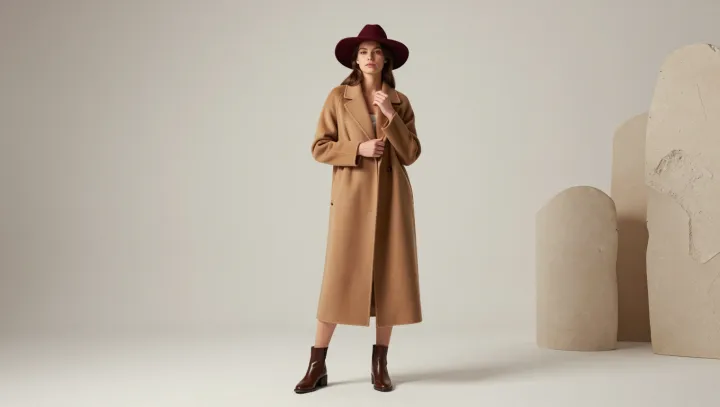
Autumn light cheats more than the clothes do. Under that lower, softer sun, shorter wavelengths scatter, and the spectrum that reaches your eyes tilts toward longer, redder wavelengths, while the actual thermal emissivity of a red sweater and a gray one can be nearly identical under the same irradiance.
The real work is done by the visual system, not the wardrobe. Color constancy, the brain’s habit of discounting illumination, keeps a maple leaf recognizably red, but it also anchors the whole scene toward warmth on the psychological color wheel, nudging temperature judgments through cross‑modal perception, where chromatic cues bias how the somatosensory cortex interprets the same skin thermoreceptor input.
Cognition then adds its own markup. Repeated cultural pairing of reds and browns with heat sources, from fire to brick interiors, builds strong associative memory traces that prime the autonomic nervous system; experiments show people rate identical rooms as warmer when lit in orange‑red, even with unchanged air temperature and identical convective and radiative heat transfer conditions.