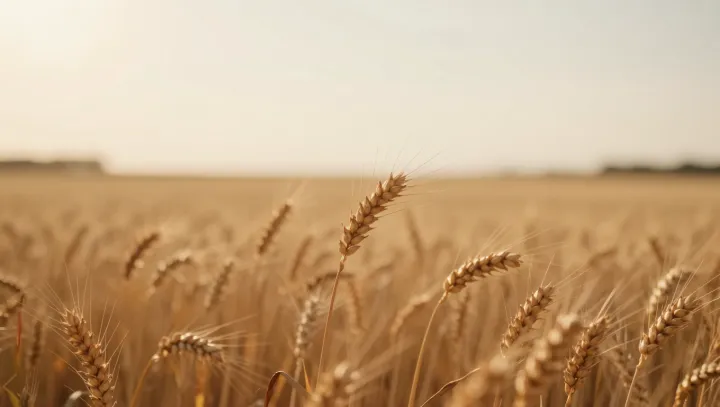
Mangzhong is not folk poetry; it is a field protocol disguised as a season name. The solar term lands on a tight intersection of day length, heat accumulation and soil moisture that modern agronomy now tracks with growing degree days and phenology models, and that window happens to be when cereals lock in spike number and grain potential.
The blunt truth is that crops do not care about culture, they care about thresholds. Around Mangzhong, photoperiod and temperature jointly trigger floral initiation in many grains, shifting meristems from leaf to spike formation while root systems still expand, and experiments show that sowing just days off that cue alters tiller survival, grain filling duration and the balance between starch deposition and protein synthesis in the endosperm.
What looks like mysticism is really long, rough field trialing without spreadsheets. Generations of farmers, using trial‑and‑error selection, tuned their calendars until Mangzhong coincided with the most reliable match between rainfall patterns, hormone dynamics such as gibberellin surges, and pest pressure minima, and when that alignment is hit, yield, kernel weight and even micronutrient density fall into place with a precision that now shows up in controlled plots and lab assays.