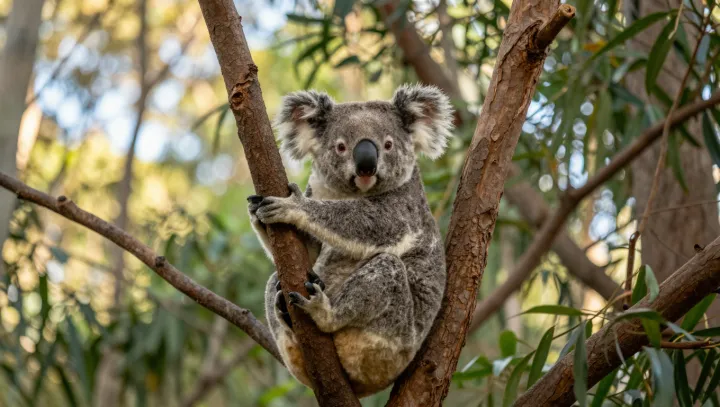
Koala biology makes the animal look almost reckless about thirst. Open water sits unused while the marsupial clings to rough bark, relying on a biochemical trick that would push most mammals into dehydration.
Eucalyptus leaves, dismissed as poor fodder for grazing species, act as both ration and reservoir for koalas, whose digestive tract functions as a slow-release hydration system built on extended gut transit time and intensive hindgut fermentation that draw moisture locked inside fibrous tissue. The leaves contain a high proportion of water by mass, and koalas counter their toxic secondary compounds with specialized liver detoxification pathways, allowing them to process large volumes without catastrophic poisoning. Because metabolic water production from oxidizing leaf carbohydrates adds to this intake, many individuals maintain fluid balance without approaching streams or ponds at all.
The name often translated as “no water” is not romantic branding but a sharp observation of field behavior. Ethologists tracking koala activity patterns report drinking from surface water mainly during heat extremes or illness, a behavioral outlier rather than a routine stop at the equivalent of a canteen. That pattern exposes an edge-of-failure strategy: conserve energy with low basal metabolic rate, squeeze moisture from a monotonous diet, avoid predation and pathogen risk at exposed water sources, and accept that one prolonged dry spell or canopy dieback could still push this carefully tuned physiology past its limit.