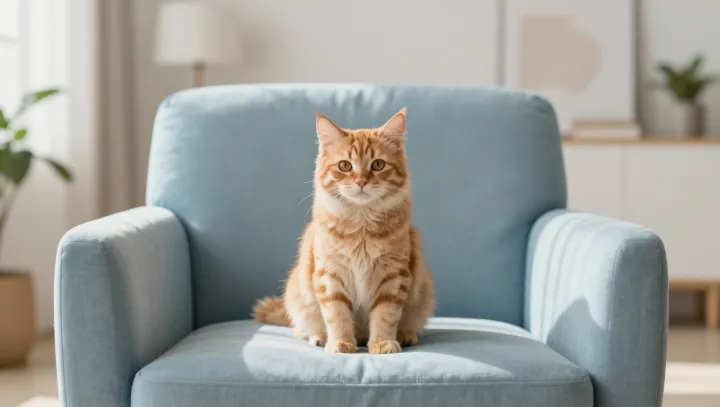
A half-lidded stare, then a slow blink, is often the loudest thing a cat says all day. In feline social code, this tiny pause in vigilance functions less as a cute quirk than as a negotiated ceasefire, a moment when a predator species voluntarily switches off its guard dog of constant visual scanning.
Ethologists argue that this gesture is not sentimentality but risk management. Predators live on continuous sensory input; closing the eyelids, even briefly, interrupts threat detection in the superior colliculus and visual cortex, so a cat will only do it when its autonomic nervous system has shifted away from fight-or-flight. Laboratory studies comparing neutral gazes with slow blinks show reduced pupil diameter, lower heart rate, and increased approach behavior toward the blinking human, indicating a measurable drop in perceived danger.
The trust is not mystical; it is biochemical and learned. When a cat slow blinks at a familiar person, researchers have recorded changes in oxytocin pathways and parasympathetic activation, markers associated with social bonding in mammals. Caregivers who mimic the gesture report higher rates of voluntary contact and affiliative behaviors such as cheek rubbing, suggesting that the slow blink operates as a cross-species social cue, a minimal movement that quietly rewires a relationship.