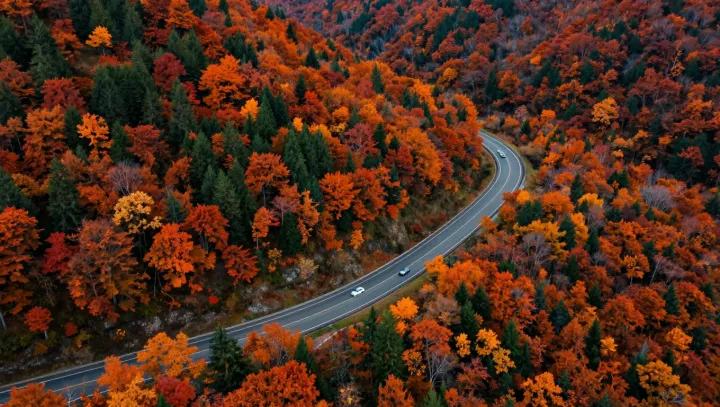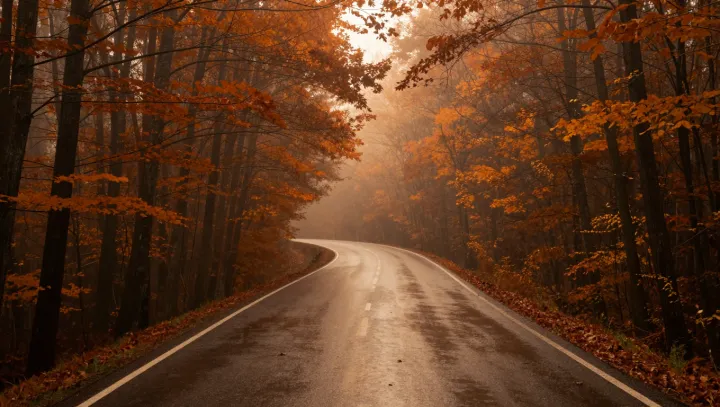
One quiet month of drizzle is often the outlier, not the rule. Over forest backroads, what feels like endless grey can exist only while the jet stream runs flat and weak, leaving a shallow pressure gradient and a slow, almost lazy, conveyor of moist air. Short showers repeat. Nothing organizes. Roads stay wet, never wild.
Far more typical is the autumn snap when that same jet stream buckles, sharpens, and drags high‑altitude momentum over the same woods, and suddenly baroclinic instability, latent heat release, and a tightened pressure gradient collaborate to bundle rain into compact cyclones that march through in files. Drizzle vanishes. In its place arrive discrete storm clusters, each one born where fast upper‑air flow overruns dense surface air and where warm, ocean‑fed moisture is funneled inland along what forecasters call an atmospheric river, a focused corridor of high precipitable water rather than a vague humid plume.
The surprise is not that the downpours come, but that they skip so much in between. A small poleward shift of the jet, a modest sea‑surface temperature anomaly, and the entire hydrologic script along those forest roads is revised from constant, forgettable damp to a sequence of brief, violent episodes that are easier to count than to predict.