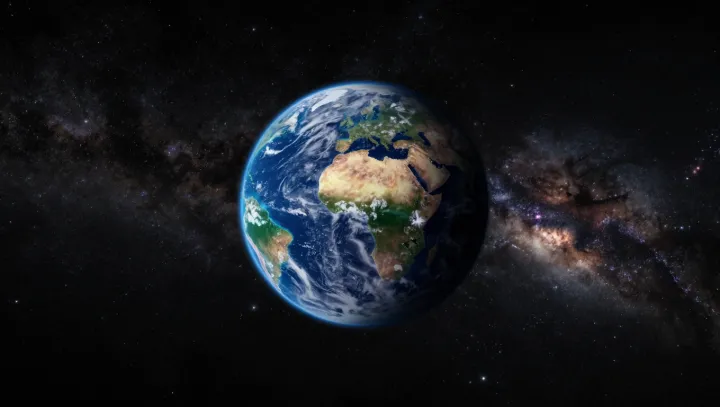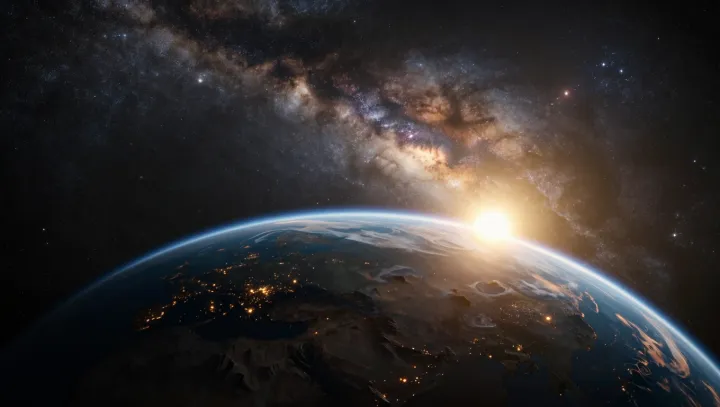
That gentle sky is a war zone. High above the blue, a narrow band of gas and charged particles runs at full capacity, intercepting energy that would erase oceans and cities in a heartbeat. The shield is not thick. It is fragile, noisy, under constant bombardment from cosmic rays, solar storms and stray stone.
The first surprise is how little stands between space and skin. Most of the work happens in the upper atmosphere and magnetosphere, where rarefied air and magnetic field lines force incoming high‑energy photons and particles into long detours, triggering electromagnetic cascades and ionization that bleed energy into harmless secondary showers. Supernova radiation that could sterilize a bare rock is instead scattered, absorbed by molecules like nitrogen and oxygen, then re‑emitted as faint airglow and heat.
The second shock is how brutally this thin shell treats solid intruders. Asteroids meet hypersonic compression, ablation and shock fragmentation long before they see ocean or soil. Dynamic pressure rises faster than their fractured interiors can carry stress, so most bodies disintegrate into plasma and grit in the mesosphere and stratosphere. What looks like serenity from the ground is, in fact, continuous triage at the edge of space.