Red dust wins the argument before any scientist speaks. On screen, Mars glows like a ready‑made stage, so storytellers fill it with minds, cities, politics. Empty plains do not sell tickets, so intelligence becomes the default special effect, cheaper than a careful script yet emotionally expensive enough to feel grand.
Hollywood, not astrobiology, sets the baseline expectation. Narrative structure demands an antagonist or at least a mirror, and sentient Martians offer both, while real missions drag through spectroscopy, radiolysis models and maddeningly low signal‑to‑noise ratios. Long story short. Cameras and drills return mostly basalt, perchlorates, thin carbonates. No fossils. No cells. Just geochemistry that must be run through statistical inference until the excitement drains away and only probability distributions remain.
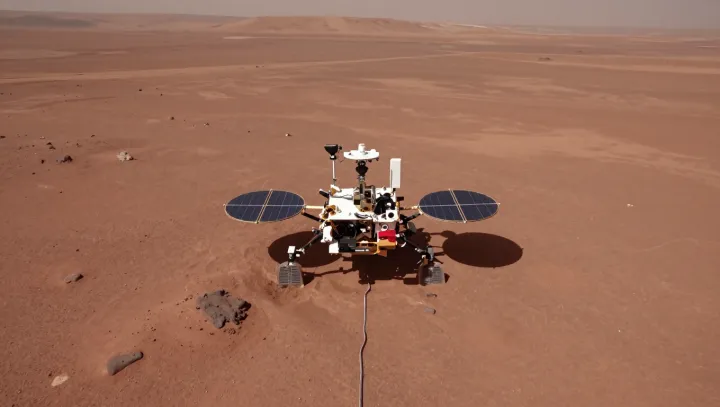
The odd twist is that this scientific austerity actually feeds the myth. A silent planet invites projection, so audiences upgrade trivial methane blips into secret civilizations and turn ambiguous organics into buried archives. Storytellers obey that desire, not the data, because a lone rover grinding regolith for trace organics cannot stare back, argue, invade, or fall in love.