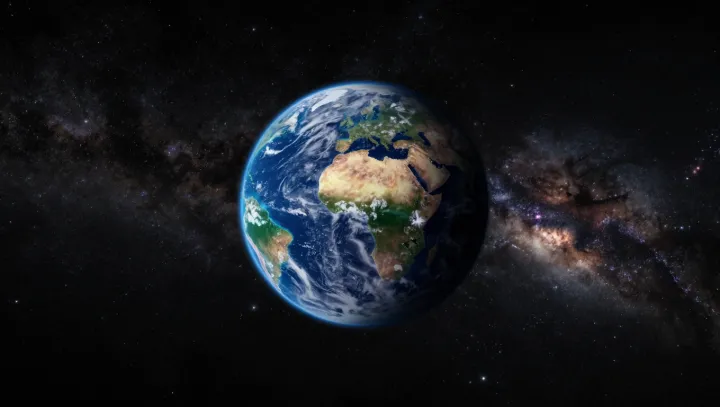
Silence, not abundance, is the loudest feature of the search for life. Radio telescopes sweep the sky, spectrographs dissect exoplanet light, yet every confirmed biosignature column on the spreadsheets stays empty while the galaxy count rises into the hundreds of billions. Against that statistical backdrop, Earth looks less like a typical address and more like a rare chemical accident that managed to persist.
The harsh claim from many origin‑of‑life researchers is that chemistry resists becoming biology. Prebiotic synthesis can build amino acids and nucleotides in flasks, but linking them into self‑sustaining networks of replication and metabolism requires a narrow corridor of temperature, solvent composition, and energy flux. Concepts such as nonequilibrium thermodynamics and autocatalytic sets suggest that once a self‑copying system appears, Darwinian selection can sculpt it, yet getting to that first self‑copying loop may demand a planetary lottery ticket with multiple winning numbers at once.
Equally stark is the argument from planetary science. Many exoplanets sit in so‑called habitable zones, but detailed climate models show that long‑term surface liquid water demands unusual combinations of atmospheric chemistry, plate tectonics, and magnetic shielding. Without stable carbon–silicate cycling or protection from stellar flares, nascent biospheres stall or never ignite. So the cosmos may be teeming with organic molecules and sterile oceans, while this planet alone crossed the fragile threshold where molecules learned to inherit error‑laden copies of themselves and call that process life.