A wooden frame skimming along a dirt path did not look like the ancestor of a winged racing prototype, yet the line is direct and unforgiving. That first “running machine” was nothing more than balance and gravity, a steerable beam on two wheels, but it fixed the essential geometry that still defines modern chassis design and rake angles.
The real disruption came when human legs were replaced by the internal combustion engine, and the frame stopped being furniture and became a stressed member carrying torque, vibration, and heat. As speeds climbed, simple tubular steel yielded to aluminum beams and carbon composites, while drum brakes gave way to hydraulic discs and then carbon‑ceramic rotors, all to manage kinetic energy rising with the square of velocity.
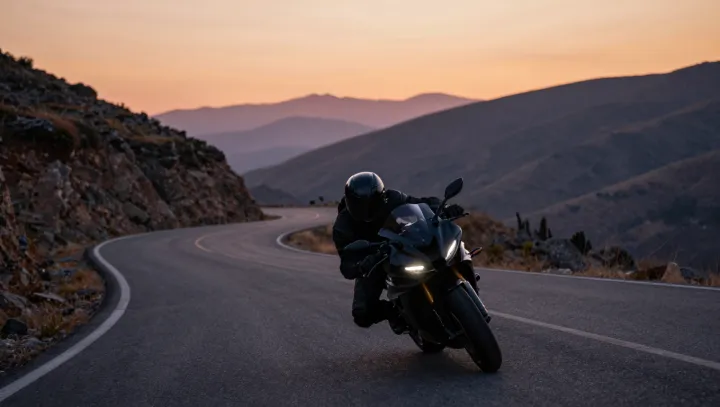
Today’s MotoGP bike is less a motorcycle and more a tightly coupled control system, and that is not romantic, it is survival. Winglets and fairing ducts generate downforce that loads the front tire under acceleration, countering wheelie tendency described by basic rotational dynamics, while ride‑by‑wire throttles feed data into traction control and anti‑wheelie algorithms running in milliseconds on inertial measurement units and engine control units.
What began as a child‑simple test of balance has become a negotiation with physics where grip, drag coefficient, and power delivery are software variables as much as mechanical ones. The wooden toy asked a rider to push and steer; the MotoGP machine demands that engineers, electronics, and aerodynamics collaborate just to let a human keep it pointed straight at 350 km/h.