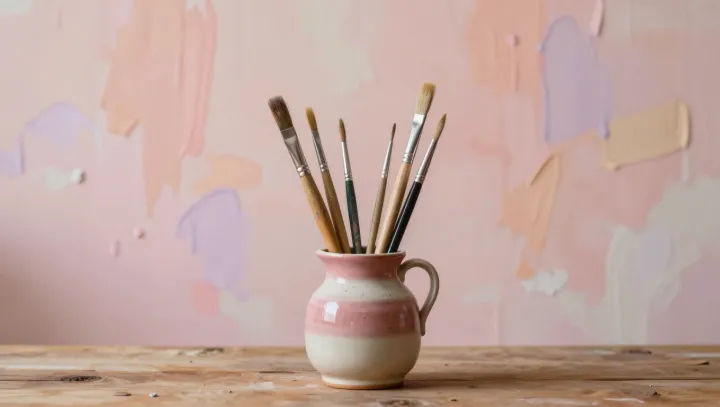
A forgotten corner often works harder than a gallery wall. Light hits two planes at once, exaggerating every streak, and that geometry gives routine studio habits an unlikely stage. As brushes are rinsed instead of discarded, pigment load drops in tiny increments, creating semi-transparent films that behave like controlled glazing rather than waste.
What looks like drudgery becomes design. Reused tape, palettes, and sponges accumulate residual color, so each pass deposits a faint echo of earlier sessions, building a kind of visual patina through simple adhesion and abrasion. Short strokes lay down matte grounds. Slower, diluted layers shift toward a pastel register, where titanium white and chalk fillers scatter light and soften saturation without any dramatic gesture.
The surprise is scale. A corner measured in hand spans can punch like a full street wall because the eye reads three things: contrast, edge, and density of mark. Micro-relief from dried ridges catches oblique indoor light much as a brick facade catches sun, amplifying shadows along every brush line. What a muralist gets from masonry, this quiet process steals from drywall and patience.