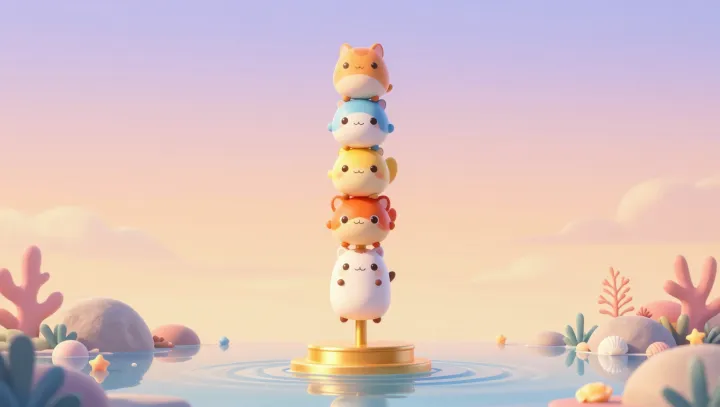
Pastel fur now works harder than most brand strategists. On screen, kids’ cartoons quietly run controlled experiments in affective neuroscience and color theory, tuning character design the way a lab tunes variables. Soft gradients sit near the so‑called K‑selection sweet spot of infant schema: oversized eyes, rounded jaws, low spatial frequency detail that ventral visual pathways process as safe and rewarding.
What looks innocent is in practice a closed-loop test bench for emotional price elasticity. Studios track biometric proxies, from galvanic skin response to eye‑tracking, while A/B testing hue, saturation, and contour density across pilots, shorts, and social clips. Oxytocin‑linked bonding cues migrate from developmental psychology papers straight into character bibles; attachment theory becomes a merchandising roadmap, not a therapeutic tool.
The result is not just fandom but inventory that behaves like emotional luxury goods. Limited‑run plush drops mimic scarcity logic from streetwear, yet the underlying moat is affective: parasocial bonding, encoded through conditioned stimulus‑response loops and reinforced by algorithmic feed exposure. Adults do not simply buy a pastel fox or axolotl; they acquire a portable regulator for stress, a soft totem calibrated, almost to the nanometer of color space, to feel like relief.