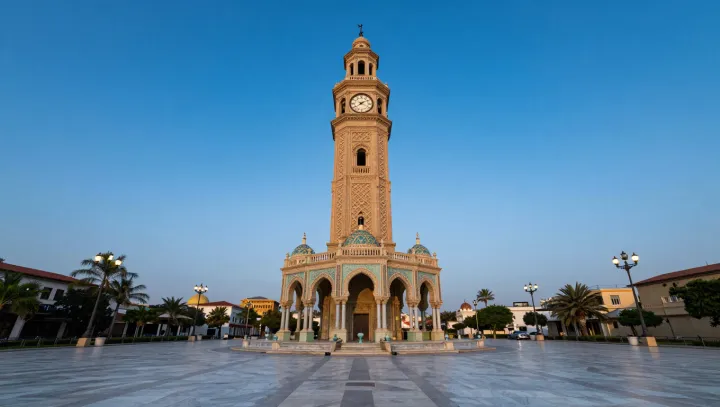
Stone, not sentiment, first defined the clock tower that now anchors the city’s sense of itself. Raised to project Ottoman authority, it synchronized markets, courts, and prayers, translating imperial power into regular striking hours that cut across older, fluid rhythms of sun, shadow, and informal bells.
The odd twist is that this instrument of discipline became a shelter for memory. Once the municipal siren of standardized time, it later outlived the empire, new borders, and new regimes, yet its clockwork kept ticking, so residents learned to fix their own biographies against its face: first kiss under the north wall, last bus from the square, the night the hands stopped during a blackout.
What began as vertical surveillance turned into horizontal reference. Streets were renamed, tram lines rerouted, skylines thickened with glass; map coordinates shifted, but speech did not. People still said, turn left at the tower, meet me under the clock, my house is two alleys behind it, giving the structure a vernacular geodesy that no GIS grid could displace.
At some point, the tower stopped marking imperial time and started marking belonging. Its chimes, once a metronome of obedience, faded into background noise, yet the silhouette remained the fixed point in a restless mental cartography, the place where directions, daily routines, and a private sense of home quietly intersect.