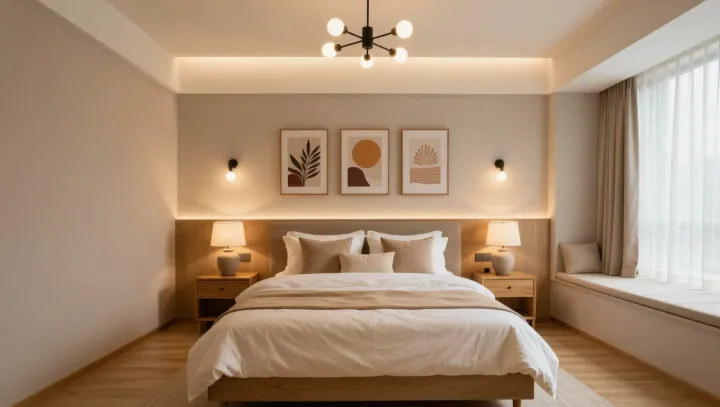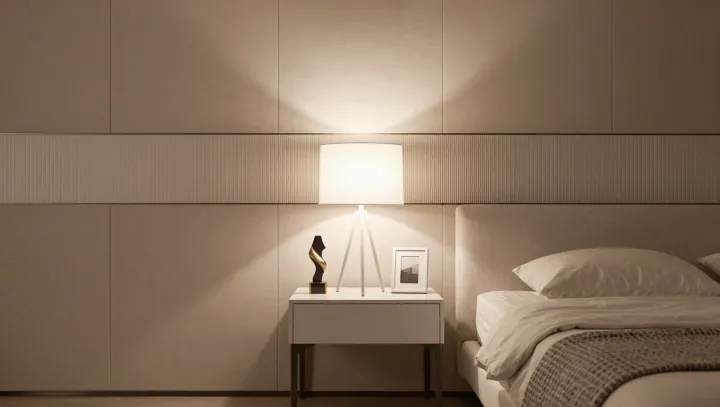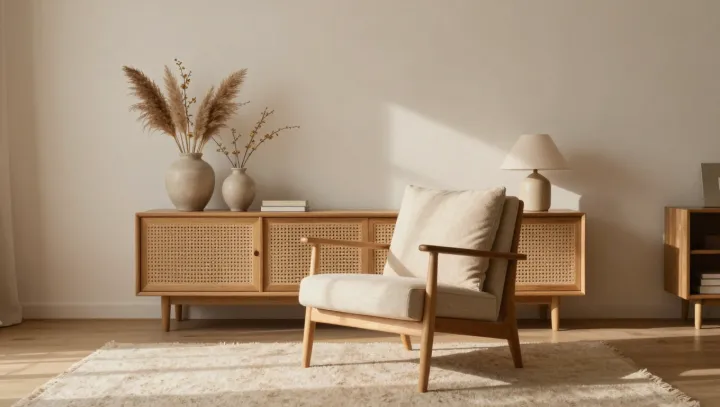
Soft light on a bare wall does more to your pulse than a designer sofa ever will. That is the blunt claim suggested by research on autonomic regulation and environmental psychology, which shows that your nervous system is less interested in price tags than in micro-signals hitting the senses at every millisecond.
The core mistake is simple: status chases what you see; biology chases what you feel. Dimmed, warm lighting lowers retinal luminance contrast, which feeds into the suprachiasmatic nucleus and nudges circadian hormone release, including melatonin. Neutral, non-clashing chairs cut down on chromatic noise, so the visual cortex and amygdala receive fewer novelty cues, reducing sympathetic arousal. Add natural textures and you tap into biophilic design effects: irregular grain, slight roughness and organic patterns modulate somatosensory input and lower heart rate variability indices linked to chronic stress.
Big furniture overhauls, by contrast, often operate at the wrong layer of the stack. They upgrade form and cost but leave lux levels, spectral composition, acoustic absorption and tactile feedback almost untouched, so the hypothalamic–pituitary–adrenal axis keeps firing as before. Small tweaks win because they target high-leverage gateways: photoreceptors, mechanoreceptors, and the vagus nerve. Calm, in other words, is a physiological protocol, not a furniture catalog.