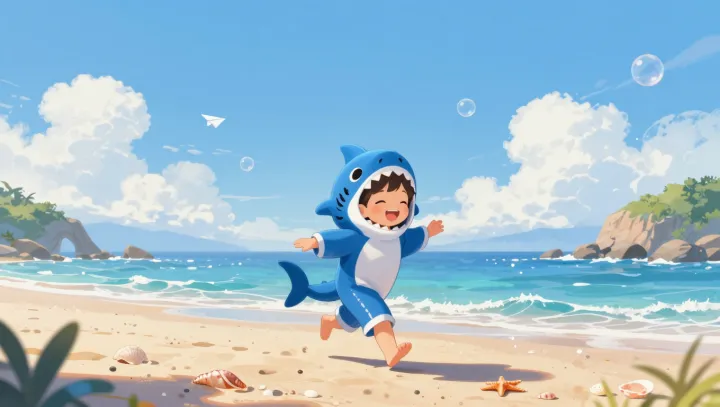
Wet sand, not a bedroom, may be the most underrated stress lab. A child in a floppy shark costume bolts toward the surf, and inside that absurd silhouette, endocrine and cardiac systems are quietly rebalancing. Researchers studying “active play” report that unstructured bursts of running can trigger cortisol reductions comparable in magnitude to those seen after long restorative sleep, especially in children whose stress hormones sit slightly elevated at baseline.
The counterintuitive part is that sprinting hard can calm the body later. Short, intense exertion pushes the sympathetic nervous system to spike heart rate and blood flow, but the real gain comes in the recovery curve. When the run ends and the shark suit sags, baroreflex sensitivity and vagal tone increase, nudging the autonomic nervous system toward parasympathetic dominance. That shift lowers resting heart rate and improves heart rate variability, two markers often improved by deep sleep cycles and slow-wave neurophysiology.
Play, not quiet, is doing the regulation work here. The costume adds psychological insulation: stress centers in the brain read the sprint as safe excitement, not threat. That framing dampens amygdala-driven alarm, moderates hypothalamic-pituitary-adrenal axis output, and prevents cortisol from staying chronically high. The result is a compact, sunlit intervention in which a few chaotic minutes of running in a ridiculous shark suit carry some of the same biochemical signature as a long, calm night.