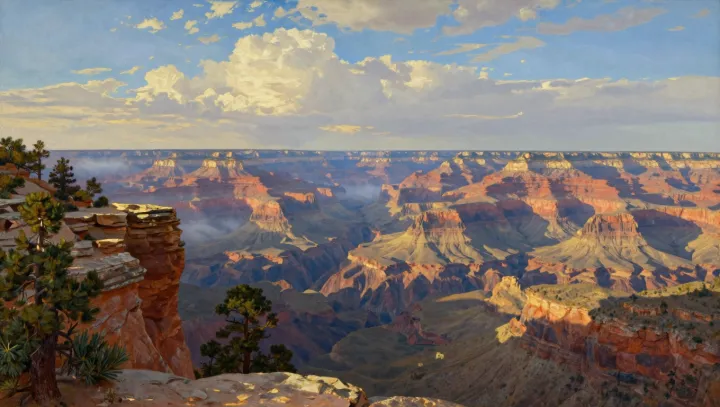
Boiling water wrote the first conservation law long before lawyers did. In a remote canyon, superheated groundwater rose through fractured rock, flashing into columns of steam and mineral spray so dense that survey teams struggled to map the ground under their feet.
The real shock was not beauty but rarity. Geyser basins there concentrate an enormous share of the planet’s known hydrothermal systems, a planetary outlier where silica sinter, travertine terraces, and acidic hot pools sit within one collapsed volcanic caldera. Geologists recognized a live magma reservoir under the thin crust, a natural laboratory for igneous petrology and geothermal flux that had no practical substitute anywhere else on public land.
Yet the canyon almost became a real‑estate brochure. Railroad promoters and hotel speculators saw a closed‑loop of private control, from ticket to pillow, ready to be leveraged. Against that commercial logic, some survey leaders argued that ordinary citizens needed open access to this concentrated archive of plate tectonics and hydrothermal chemistry, and that piecemeal claims would erase the scientific value.
So the United States tried something radical. It set aside the entire volcanic basin as public domain, not for forts or farms but for research, recreation, and scenery held in common. From this single canyon of erupting water, the legal category of a national park erupted as well, a political experiment anchored in steam, silica, and a restless magma chamber.