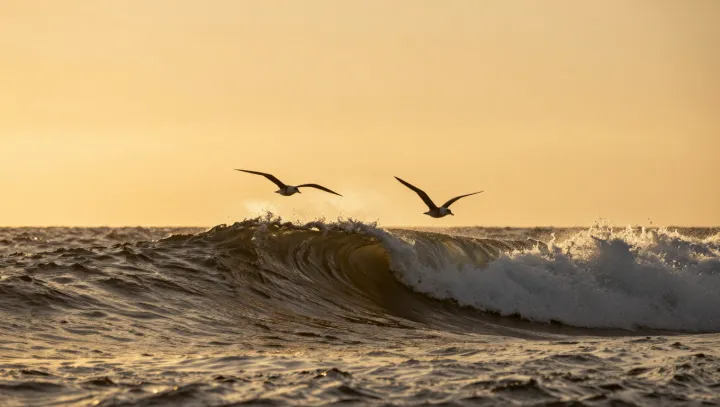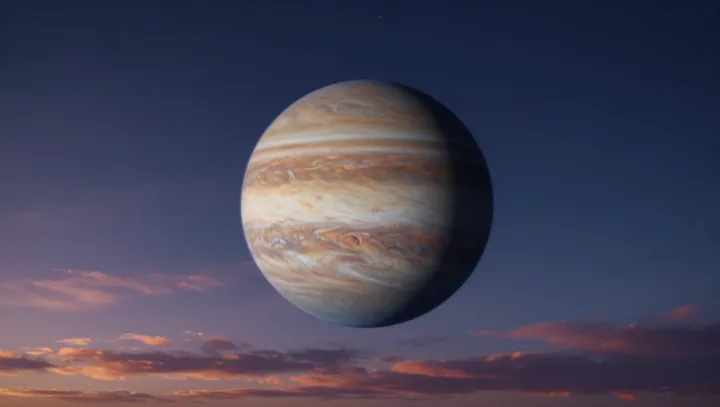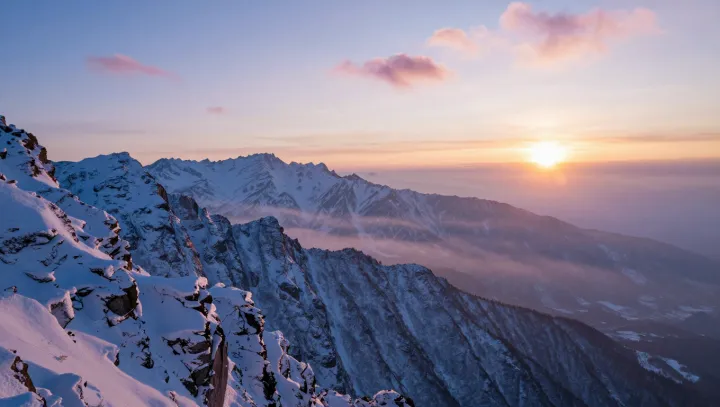
Color, not gravity, quietly links Mars to your favorite winter ridge. The blue fringe around a Martian sunset and the pink wash on snowbound peaks both start with sunlight forced to run a gauntlet of gas and particles, where scattering physics edits the spectrum long before it reaches an eye or a camera sensor.
The counterintuitive part is that the same basic process can flip the visual script. On Earth, classic Rayleigh scattering by nitrogen and oxygen removes more blue from direct light, so the low Sun reddens while mountains catch that warm, stretched spectrum on snow crystals that act as tiny diffuse mirrors. Over Mars, carbon dioxide air is thin but dust is dense; Mie scattering by those larger grains redirects blue light into the path between observer and Sun, so the horizon near the star turns cool while the surrounding sky glows rust.
What feels like mood or season is really a change in particle size distribution and optical depth. Add more aerosols, shift grain diameters, and the radiative transfer problem rewrites the palette: pastel magentas over a cold valley here, cobalt halos around an alien sunset there, all from the same equations quietly solving for who gets the blue and who is left with the red.