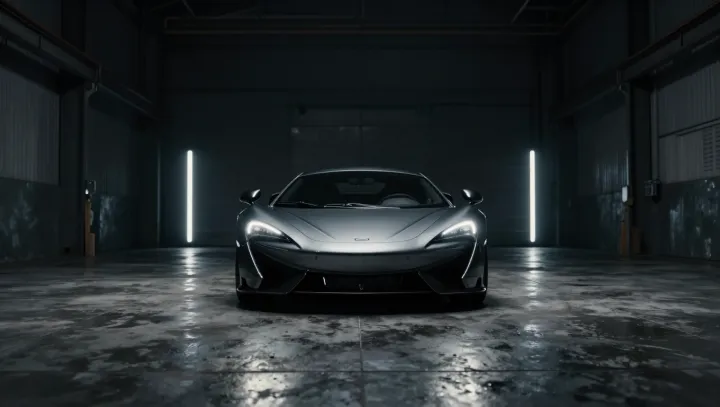
Headlights, not horsepower, do much of the heavy lifting in how a supercar feels. A razor edge of white against dark tarmac hits your brain faster than any spec sheet, because the visual system runs a tighter feedback loop than your hearing ever will.
Designers are blunt about this power hierarchy. The optic nerve and primary visual cortex process luminance contrast in a few rapid stages, while the rumble from the exhaust takes longer to be parsed by the auditory cortex and then tagged as threat or excitement. A narrow beam, high color temperature LEDs, and exaggerated DRL signatures create steep gradients of light and shadow that spike activity in motion-sensitive neurons even when the car is barely crawling through traffic.
The sharper those beams, the more your amygdala reads intent. Bright, focused light mimics the kind of high-contrast cues associated with approaching danger in evolutionary terms, so the car feels aggressive before it even moves. Psychophysics studies show that people systematically overestimate the speed and mass of objects that carry intense, directional light; designers quietly leverage that bias with thin housings, knife-like cutlines, and hard light falloff rather than louder mufflers.
So the real trick is not speed at all. It is contrast engineering, tuning luminance, beam geometry, and edge definition until the car’s face shouts while the chassis only whispers.