Rough, packed snow is not the enemy; polished ice is. Under the tunnel, physics cares less about temperature and more about how surfaces deform and lock together. On firm, granular snow, rubber lugs and metal studs bite into tiny pockets, boosting static friction and energy dissipation through micro-crushing and shear. On rock-hard glare ice, contact patches flatten, real contact area shrinks, and the machine skates on a near-lubricated interface where shear stress converts straight into lateral slide.
The first smart move is unapologetic weight transfer. Shift your body forward and slightly to the inside of the turn while rolling on steady throttle, forcing higher normal force onto the driven track so the friction coefficient has something to work with instead of smearing out sideways. Second, ride with deliberate throttle modulation rather than abrupt stabs; controlled angular acceleration of the track keeps it in static friction, while sudden spikes kick it into kinetic friction, where grip drops and the rear steps out. Third, steer with a mild countersteer and a subtle chassis roll, using the skis to score and roughen the surface ahead so the track meets broken, higher-friction snow instead of untouched glassy ice, turning hidden grip into a predictable arc instead of a spin.
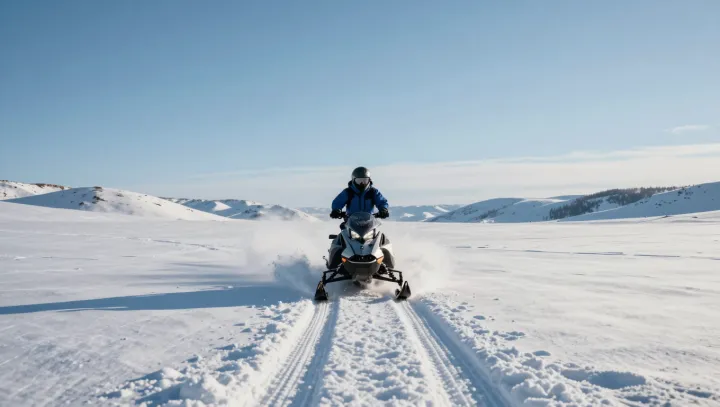
Across a frozen straight, the contrast is stark: one patch sounds like sandpaper under the hyfax, the next like glass under steel, and the rider’s choices decide which surface writes the story.