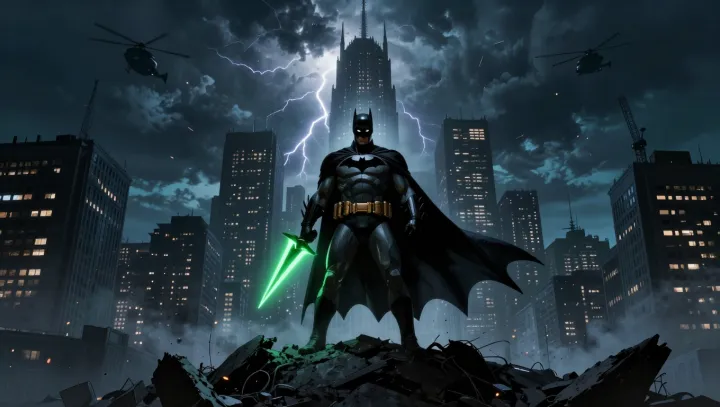
Pure narrative necessity, not raw power, puts an animated Batman above god‑level allies. In a universe crowded with invincible figures, the story engine needs a character who can fail, learn, and still walk into a room with deities and move the plot. So the scripts quietly wire him as the control variable. Everyone else is spectacle; he is the decision point.
At the core is a bias toward cognition over force. Batman is framed less as a brawler and more as a forensic algorithm in a cape, a constant exercise in deductive reasoning and contingency planning. While other heroes punch through mountains, he identifies the exploit, runs the mental threat model, and carries the one tool that breaks the supposedly unbreakable opponent. Power scales; his preparation scales faster.
There is also a structural trick. A mortal who can drop a god gives viewers a calibration tool for the entire universe. When Batman outplans a sun‑powered ally or disables a magic‑driven foe, writers are not diminishing those figures; they are benchmarking them against the one human who has mapped their weaknesses. The more absurd the surrounding power levels grow, the more his stubborn limitations turn into the sharpest weapon in the room.