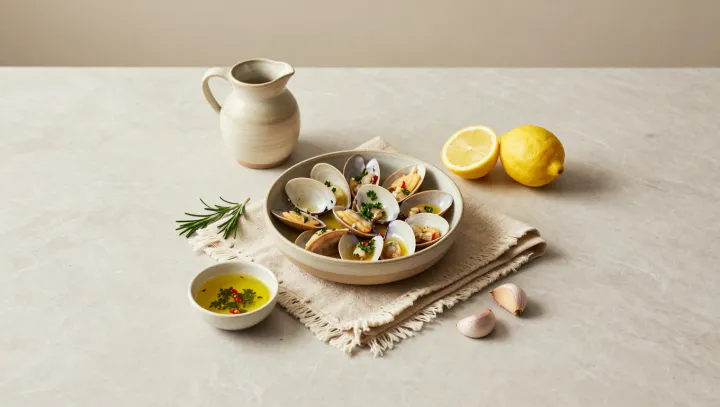
A single bowl of clams in lemon, garlic and herb oil explains flavor science more cleanly than a table buried in plates. On that stripped surface, glutamate from the shellfish, the chloride in salt and the organic acids in lemon interact in a tight, legible system, without interference from sugar, starch or smoke.
The real surprise is how much molecular drama hides in that calm broth. As clams heat, proteins denature and release free amino acids, boosting umami while trimethylamine oxide breaks down into trimethylamine, sharpening the marine edge. Garlic contributes sulfur compounds like allicin that bind and fade quickly, while herb oils deliver terpenes that sit on the palate, extending aroma. With only one main matrix of fat and brine, sensory receptors track those volatile compounds and ionic shifts with high signal-to-noise, instead of being flooded by competing sauces and textures from a long tasting menu.
A crowded feast often behaves like bad experimental design. Too many variables, no clear control. In the focused bowl, contrast is engineered: acid against fat, umami against salinity, heat against the sweetness of shellfish glycogen. That tight contrast lets diners perceive Maillard browning on a toasted crumb or the exact threshold where lemon tips from bright to harsh. Strip away the clutter and what remains is a kind of open lab bench, disguised as dinner.