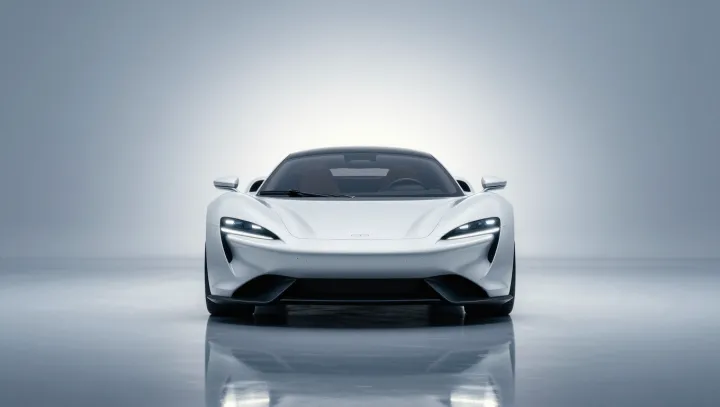
Air, not horsepower, is the Speedtail’s real opponent. Its long, smooth body is a public admission that at extreme velocity, the square law of aerodynamic drag punishes brute force and rewards efficiency. Drag rises with the square of speed, and the power needed to push through it climbs with the cube, so every extra mile per hour becomes disproportionately expensive.
McLaren’s answer is ruthless: reduce the coefficient of drag and clean the airflow before stressing the powertrain. Active aero surfaces, a teardrop planform and covered front wheels all work to shrink the frontal pressure spike and delay flow separation. That strategy turns the car into a low-resistance projectile, allowing a fixed output from the hybrid drivetrain to carry it deeper into the upper registers of its velocity envelope.
The quiet truth is that adding power alone would be a crude fix. More output means more cooling demand, more mass, more drivetrain losses, and diminishing returns against the cubic growth of required power. By treating drag as the primary variable in the equation for aerodynamic resistance, McLaren converts every kilowatt into more speed instead of more waste heat, making the Speedtail less a muscle car and more a study in fluid dynamics.