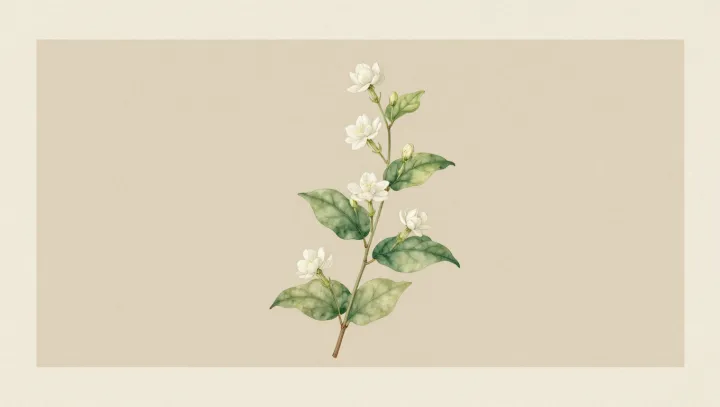
Those fragile, translucent petals are not weak at all. Under wind and rain, many flowers behave like carefully tuned flexible shells, using controlled bending and twisting to shed loads the way an engineered deployable structure redistributes stress. Instead of resisting force with thick tissue, petals exploit thin-film mechanics: low bending stiffness, anisotropic elasticity along veins, and subtle curvature gradients that steer deformation away from damage-prone regions.
The smarter strategy is surrender. By allowing large elastic deformation, petals reduce peak aerodynamic pressure, very much like a wind-tunnel-tested membrane roof that billows rather than tears under gusts, a direct consequence of fluid–structure interaction. Vascular bundles act as reinforcement ribs, creating stiff and soft zones that guide crack paths and delay fracture, a pattern reminiscent of stress trajectories in finite element simulations of composite laminates.
Survival also depends on how impacts are absorbed, not blocked. When raindrops hit, the curved, compliant surface converts normal impact into sliding, extending contact time and spreading impulse, a classic case of impulse-momentum management. Micro-scale cuticle ridges and varying petal thickness promote localized buckling and damping, turning destructive kinetic energy into reversible strain rather than catastrophic tearing.