Scissor doors are terrible furniture if you think of a car as a chair on wheels. They are narrow, awkward in daily traffic, and add structural weight to already heavy carbon tubs, yet they persist on the most expensive models as if they were non‑negotiable hardware.
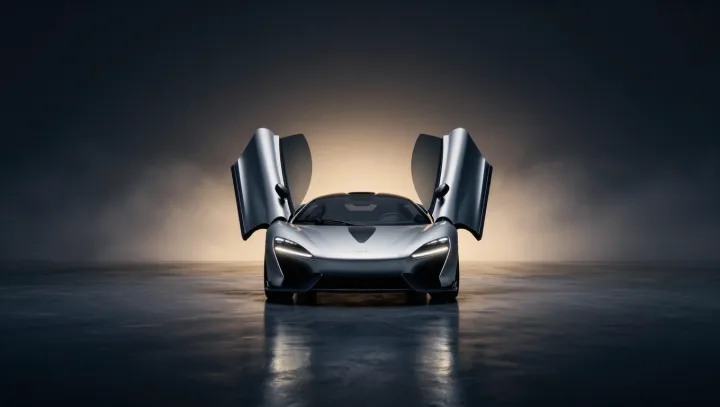
What they really sell is control over light and framing. A vertical door cuts a clean luminous plane that photographers can treat like a moving softbox, turning a parking apron or tunnel into something that behaves like a controlled studio set. With the door up, the carbon fiber sill, the driver, the instrument panel, even the brake pedal fall into a composed triangle that reads instantly in a viewfinder, no matter how messy the background actually is outside the frame.
Marketing departments understand this better than ergonomics engineers. A standard side‑hinged panel hides the cockpit and breaks the silhouette, while a scissor hinge preserves the wedge profile and opens a theatrical portal straight toward the lens. That geometry creates repeatable angles, predictable specular highlights, and a kind of built‑in stage lighting that rewards every smartphone shot and every studio rig equally. Comfort loses. The photograph wins.