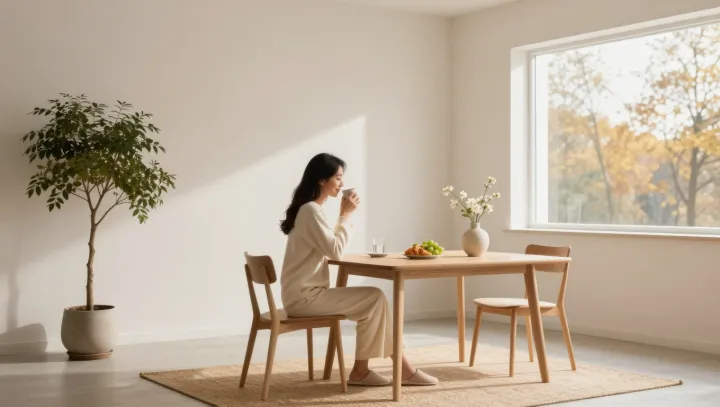
Steam from a coffee mug sells a fantasy of rest long before any office login. The slow, silent breakfast that populates lifestyle feeds is framed as personal repair, yet time-use surveys report women logging far more unpaid domestic minutes than men in the early hours. Eggs, dishes, backpacks, laundry. The scene marketed as retreat is also a shift.
What feels radical, though, is not the task list but the claim to tempo. Studies of household labor show a persistent gender gap in unpaid work, with women stacking childcare, food preparation, and emotional planning on top of paid employment. Against that statistical baseline, twenty unrushed minutes with a plate and a book can register less as indulgence than as a small rebellion against chronically fragmented attention and role overload.
The language of self-care, then, often mislabels a coping mechanism as luxury. Social reproduction theory describes how cooking, cleaning, and caregiving keep labor markets running while remaining off payrolls; a quiet breakfast lives inside that system, not outside it. Women are still timing toast between packing lunches and answering early emails. The ritual so often photographed as escape is, for many, just the only negotiable corner of a morning they do not fully control.