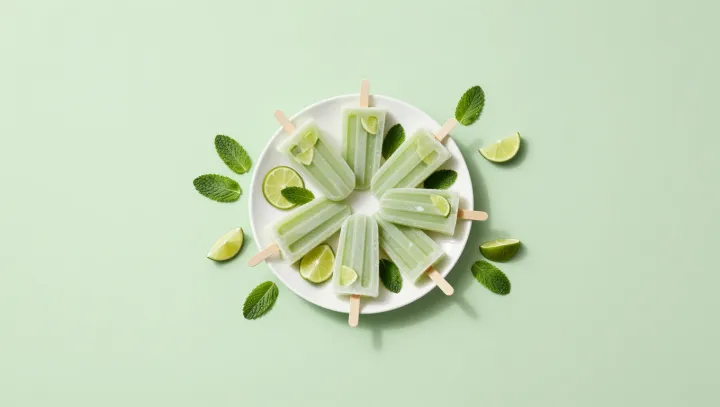
A lean lime–mint–cucumber popsicle can feel like a bigger treat than a dense cream dessert loaded with sugar. The trick is not in the freezer; it is in sensory coding inside the brain. Bright acidity from lime increases salivation, spreading dissolved sugar more efficiently over taste buds, while the gustatory cortex interprets that contrast between sour and sweet as amplified sweetness, not diluted indulgence.
Even bolder is the way aroma cheats the score. Mint’s volatile oils race through the retronasal olfactory pathway, where the olfactory bulb and limbic system fuse smell with memory and reward, so a modest sugar dose rides on a wave of menthol perfume that the brain upgrades into a fuller flavor profile. Cucumber adds water content and crisp green notes, boosting perceived freshness through sensory contrast without adding sucrose or fat to the mix.
Cooling makes the final move. Menthol in mint activates TRPM8 receptors on trigeminal nerve fibers, a somatosensory channel that signals cold and lightness rather than heaviness and satiety. Cream desserts, dominated by fat and viscosity, stimulate fewer of these pathways and more prolonged oral residence, which the reward system can read as cloying. The popsicle’s sharp, cold, aromatic hit ends quickly, but the neural echo of refreshment lingers longer than the melt.