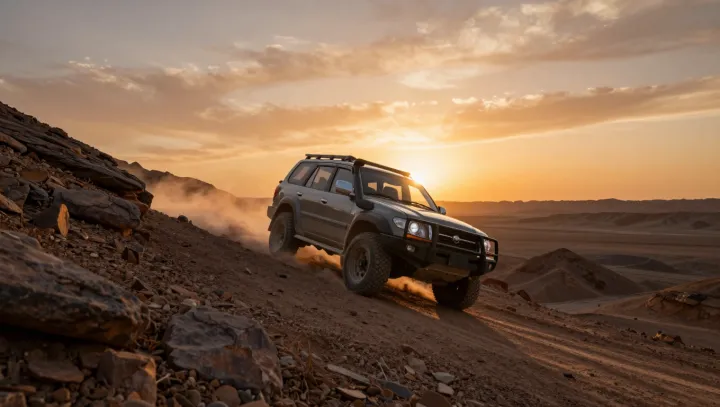
That “clumsy” 4x4 is not struggling. It is doing its job. A tall, square body leaning hard on a rock step is often the visual side effect of geometry and hardware tuned for traction, not for curb appeal.
The real divide starts with body-on-frame construction and long-travel suspension. A traditional 4x4 often runs solid axles or at least generous articulation, so each wheel can follow the terrain while the chassis twists. The result looks dramatic: big lean angles, tires stuffed high into arches, heavy compression on one side. A road-focused SUV, built on a stiff unibody with short-travel struts, stays visually flatter but quickly runs out of suspension stroke; once a wheel lifts, contact patch and mechanical grip collapse.
Equally counterintuitive is the way ugly numbers beat pretty stances. High ground clearance, large approach and departure angles, and a favorable breakover angle demand tall ride heights, short overhangs, and often narrow tracks. That stance looks tippy. Yet it lets the 4x4 climb ledges without scraping bumpers or hanging its belly on the crest. By contrast, a low, wide SUV that appears calm on a side slope may be seconds from underbody impact or beached at the center.
Underneath, the story gets harsher. Low-range gearing in the transfer case, locking differentials, and robust wheel bearings let a true 4x4 crawl slowly with controlled torque at each axle. Electronic traction control in soft-road SUVs can mimic this only within the limits of brake heat and open differentials. So the tilted truck that looks on the edge often has reserves of drivetrain margin, while the level, stylish SUV is already at its mechanical ceiling.