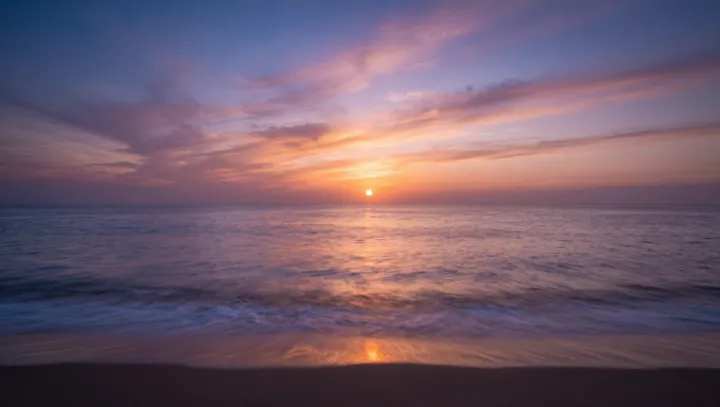
Color loyalty is a myth at the shoreline. One strip of water can shift from saturated blue to dull metal to near absence, and the cause is not mood but geometry. Low over the horizon, sunlight hits waves at a shallow angle; that angle of incidence stretches the light’s path through water, boosting selective absorption of red wavelengths and leaving reflected light skewed toward blue.
More treacherous for the eye is haze. Fine aerosols and sea salt ramp up Mie scattering, a process that redirects all visible wavelengths more evenly than Rayleigh scattering in clear air, flattening contrast until the ocean plateaus into a silver-gray band. Thin mist over bright sky turns the surface into a giant diffuser; specular reflection from countless small wave facets pushes a harsh, metallic glare straight toward a driver’s windshield.
The strangest trick is when the sea almost disappears. Against a pale sky, high dynamic range in human photoreceptors compresses differences between horizon, water, and road, so luminance, not hue, dominates what reaches awareness. Shift your position a few meters, let the sun slide a fraction lower, let haze thicken slightly, and the physics of radiative transfer rewrites the scene while the ocean itself has not changed at all.