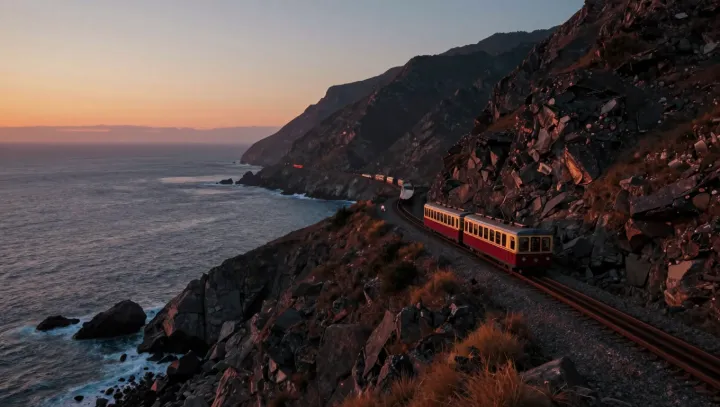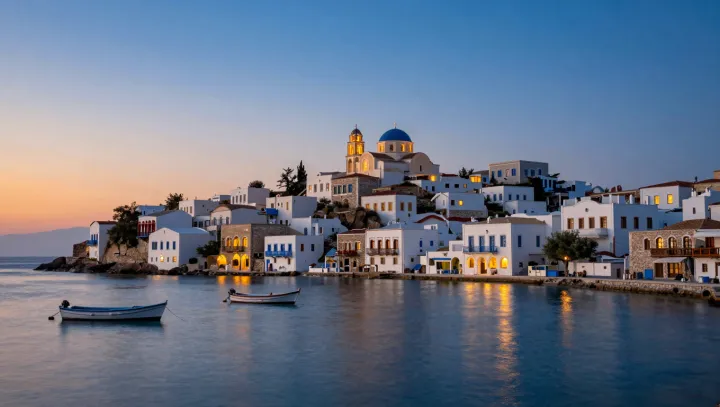
Blinding heat should have killed this harbor dream. Instead, a volcanic cliff turned into a cool coastal settlement by treating physics as its only reliable contractor. Dark basalt stores daytime heat, then releases it seaward, while the sheer rock face funnels onshore winds like a giant venturi tube, driving air through lanes cut tight between houses.
Counterintuitive as it looks, that famous white-and-blue palette is less postcard and more thermal device. Lime-based whitewash, with high solar reflectance and emissivity, bounces short-wave radiation back into the sky, so walls stay closer to ambient air than to burning stone. Blue domes, curved to minimize surface exposure and coated in reflective pigment, deflect glare while shedding heat through long-wave radiative cooling into the clear, dry atmosphere.
Scarce fresh water forced discipline that modern resorts often ignore. Thick masonry, high thermal mass, and narrow shaded alleys reduce reliance on evaporative cooling, while small, deeply set windows and cross‑ventilation openings exploit basic convective flow rather than mechanical air‑conditioning. What looks like a picturesque harbor town is, in practice, a full-scale experiment in passive design, quietly proving that aesthetics and thermodynamics can share the same roof.