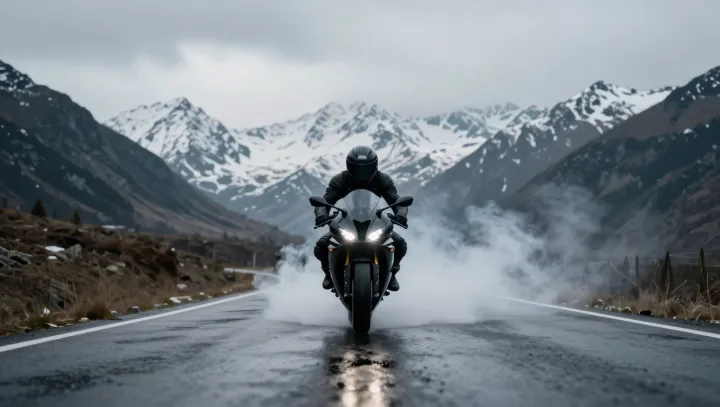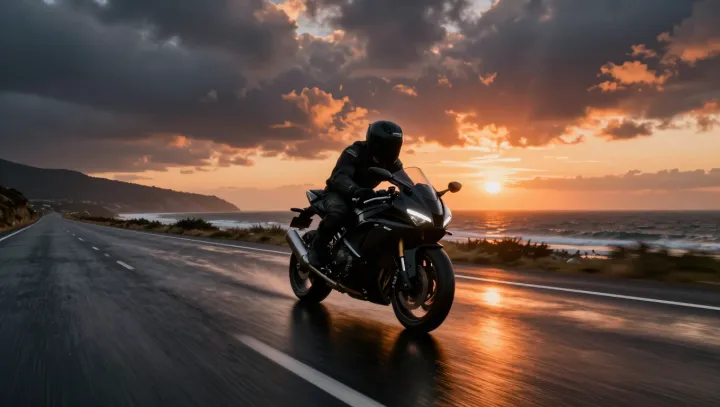
Spray from the front wheel lies to your brain. Same speed, yet the ride feels feral on a wet coastal road while a dry highway cruise feels routine. The physics barely budge; the sensory input explodes. Reflections on wet asphalt, gusting crosswinds, changing grip and engine noise bouncing off rock walls bombard visual, vestibular and auditory pathways all at once.
What really spikes is uncertainty. The brain’s internal model of traction, built from the cerebellum and proprioceptive feedback, suddenly loses confidence as micro-slides, hydroplaning risk and sidewind shear appear. That volatility lights up the amygdala and insula, which tune attention and threat detection, and they bias time perception so each second stretches and each twitch of the throttle feels amplified.
The highway, by contrast, is sensory flat. Lane markings are steady, grip is predictable, acoustic patterns are monotonous, so the prefrontal cortex can downregulate arousal and let procedural memory run the ride almost on autopilot. On the coast, no such discount applies; every curve, shimmer and gust is priced as potential danger. The bike is not faster. Your prediction machinery simply marks the bill as urgent.