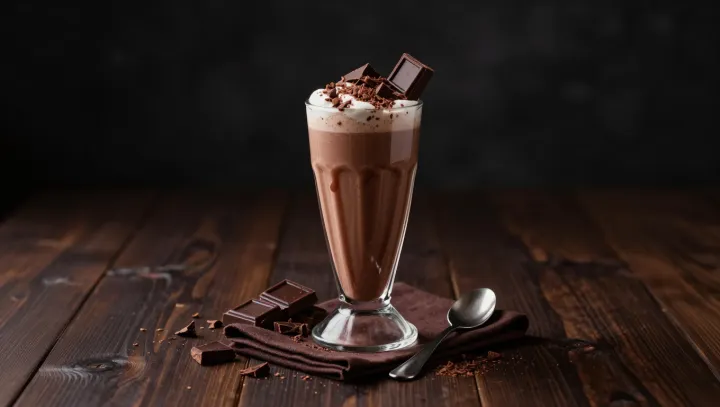
Colder mousse can taste louder than warm mousse. That sounds wrong, since low temperature literally dulls receptor sensitivity on the tongue and in the nose, yet the sensory system does not read intensity as a simple volume knob that turns up and down with temperature alone.
Dominant in this story is fat structure. As chocolate mousse cools, cocoa butter shifts toward more ordered fat crystallization, trapping volatile aroma compounds and releasing them in slower pulses, so each spoonful hits as a dense, focused signal instead of a diffuse cloud, and that concentrated arrival is often read as depth rather than as sheer strength.
Equally decisive is contrast. When mousse is cold, sweetness perception drops faster than bitterness and roasted notes, because temperature changes receptor kinetics and alters how sucrose and bitter alkaloids bind and unbind, which leaves the darker cocoa fractions relatively amplified and makes the same formula feel more intense and more adult.
Texture then rigs the verdict. Cooling raises viscosity, stiffens air bubbles, and lengthens melting time on the palate; that slow melt gives lipids more contact with trigeminal fibers that sense thickness and coolness, and the brain routinely equates this longer, heavier mouthfeel with richness, even while raw receptor sensitivity is partially muted.