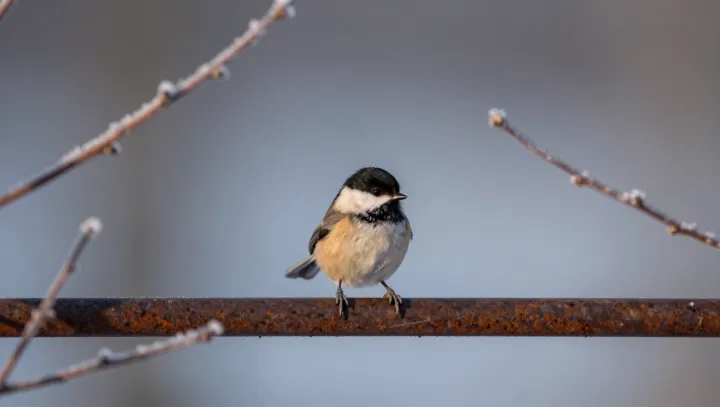
A tiny black-capped chickadee treats bitter nights less as a threat than as a calculation. Rather than bulking up or hiding, this bird leans on physiology: a built-in drop in core temperature that biologists call controlled nocturnal hypothermia. The result is an energy budget that just barely stays in the black when air feels lethally cold to larger mammals.
What looks like fragility is actually a strict thermoregulation strategy. As darkness falls, the chickadee lowers its body temperature by several degrees, shrinking the gradient between its tissues and the air, which cuts heat loss by physical law. Oxygen consumption and metabolic rate fall in tandem, so the bird burns less of the daylight fat reserve it packed through relentless foraging.
The twist is that the brain goes along for the ride. Instead of defending a constant neural set point, the chickadee allows modest cooling of central nervous tissue, slowing neuronal firing and reducing the cost of ion pumping across cell membranes. This is not torpor in the extreme sense; the bird can still rouse quickly if a predator or warm dawn demands it, but it spends most of the night in a metabolically discounted state.
Conventional survival tactics would bury such a small bird under insulation or force it to carry heavy fat loads. Those options limit agility and escape speed. Nighttime hypothermia offers a leaner trade: minimal shelter, modest fat, and a reversible shift in homeostasis that turns the long, subzero night into something closer to a bill it can actually pay.